
Tips for a Screen-Free Summer: Creating Spaces That Compete With Screens
You've probably read the articles. You know screens are problematic. You've made the resolution a dozen times: this summer, less screen time. More outdoor play. More creativity. More connection.
Then June arrives. It's hot. The kids are bored. You're trying to work or get things done around the house. The tablet is sitting right there, fully charged, containing unlimited entertainment that buys you thirty minutes of quiet. You hand it over. The resolution dissolves before the first week of summer is over.
Here's what those screen-time articles miss: telling children "no screens" without offering compelling alternatives is setting everyone up for failure. Children don't turn off screens and magically discover creative play. They turn off screens and announce they're bored, which is louder and more persistent than any notification.
The families who actually reduce screen time successfully don't do it through stricter rules or more willpower. They do it by creating environments so inviting that screens become less appealing by comparison. They design spaces that pull children toward hands-on engagement rather than pushing them away from technology.
This summer doesn't need to be a battle over screen time. It needs to be a season where your home becomes more interesting than anything a screen can offer.
Environments Over Rules
The fundamental shift that makes screen reduction work is moving from rule-based restriction to environment-based invitation. Rules create conflict. Environments create choices.
When a child hears "no screens," they hear deprivation. They feel punished. They focus on what they can't have, which makes them want it more. The battle begins.
When a child walks into a room where art supplies are set out invitingly on a table they can reach, where a half-finished puzzle waits, where a cozy reading corner has a new book they haven't seen before, they don't think about screens. They think about what looks interesting right now. The choice is natural rather than forced.
This doesn't mean screens disappear entirely. Balance is realistic. Elimination isn't. Some screen time is fine, especially when it's intentional rather than default. The goal is reducing the mindless "nothing better to do" screen time that fills hours without purpose or satisfaction.
Creating environments that compete with screens requires thought and setup. But the maintenance is surprisingly low once systems are in place. And the payoff, children who can entertain themselves, engage creatively, and actually enjoy their summer, is enormous.
Invitation to Play Setups
This concept comes from early childhood education and works remarkably well at home. An "invitation to play" is simply setting out materials in an appealing way that draws children in without adult direction.
The key is accessibility and visual appeal. Materials laid out on a table at child height, arranged attractively rather than dumped in a pile. A few colored pencils fanned beside a sketchbook. Modeling clay with simple tools arranged on a tray. Watercolors and paper ready to go near a window with good light.
Children are naturally drawn to materials that look ready to use. The setup does the work of engagement that you'd otherwise need to do verbally ("Why don't you go draw something?"). The invitation is silent and effective.
Rotate these setups regularly. Monday might be an art station. Wednesday swaps to a building challenge with blocks and loose parts. Friday becomes a sensory bin or water play setup. The rotation prevents boredom while keeping any single activity from feeling stale.
The critical detail is that children can access everything independently. If they need you to get supplies, open containers, or set things up, the invitation requires your participation to accept. When materials are on accessible surfaces in containers they can open, independence is built into the invitation.
This is where child-sized furniture transforms the approach. A table at appropriate height with chairs they can pull out themselves. Open shelving where activity bins are visible and reachable. Storage they can access without asking. The furniture becomes the infrastructure that makes invitations to play actually work without requiring your constant involvement.
The Power of Rotation
Summer is long. Roughly twelve weeks of unstructured time. No single set of activities sustains interest for that duration. Rotation is what keeps engagement fresh throughout the entire season.
Think in weekly or biweekly cycles. This week's accessible activities might include watercolors, a specific set of building blocks, and a collection of nature books. Next week swaps to modeling clay, magnetic tiles, and adventure stories. The week after brings out simple science experiments, drawing materials, and puzzle books.
Store rotation items in labeled bins somewhere accessible but not in the main play space. When it's time to rotate, the swap takes minutes. Old activities go back in their bins. New activities come out and get set up as invitations. The space feels refreshed without any purchases or major effort.
Rotation also applies to outdoor activities. This week's outdoor bin might have sidewalk chalk, a magnifying glass, and a ball. Next week swaps to bubble supplies, a jump rope, and nature journals. The backyard feels like a new destination every time the activity bin changes.
The important principle: less available at once means deeper engagement with what's there. Five carefully chosen activities rotated regularly create more sustained play than fifty options always available. Overwhelm kills engagement. Curation enables it.
Cozy Reading Corners That Actually Get Used
Every article about raising readers mentions creating a reading nook. Most families try it, find their children never actually use it, and assume their kids just don't like reading.
The problem is usually execution, not the concept. Reading corners that work share specific characteristics.
Location matters more than design. A reading corner in a bedroom where children rarely go during the day won't get used. A reading corner in the living room where family activity happens naturally will. Near a window with good natural light is ideal. Close to where you are during the day is better than beautiful but isolated.
Comfort is essential. A soft spot to sit or lie down. Pillows. A blanket for cooler mornings. The space needs to feel physically inviting, not just functional. Children who are comfortable stay longer than children sitting on hard surfaces.
Books displayed face-out rather than spine-out dramatically increases engagement. Children choose books they can see. A few books displayed with covers visible on a low shelf or propped in a basket generate more reading than a packed bookshelf of invisible spines.
Outdoor reading corners work beautifully in summer. A blanket under a shade tree. A small bench on the porch with cushions. A hammock if you have one. Taking reading outside removes the indoor-equals-bored association and makes reading feel like an adventure.
Rotate featured books the same way you rotate activities. Three or four books displayed prominently this week, swapped for different ones next week. Books they haven't seen in a while feel fresh and generate new interest.
Taking Everything Outside
Summer's greatest asset is outdoor space, even modest outdoor space. Moving indoor activities outside transforms them from ordinary to special.
Snack time on the porch instead of the kitchen table. Drawing at a table in the backyard instead of the living room. Reading under a tree instead of on the couch. The activity is identical. The setting makes it feel completely different to children.
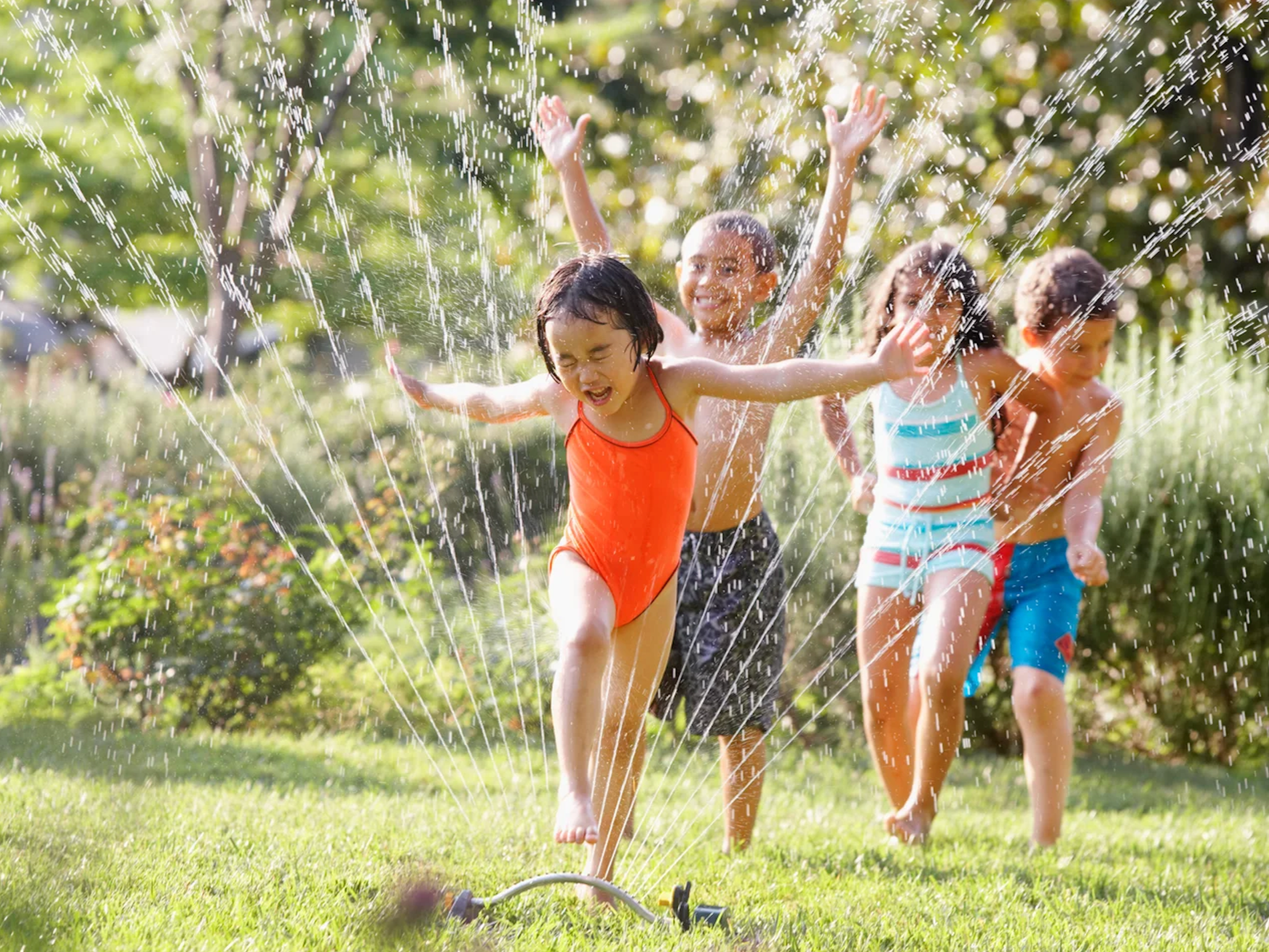
Water play is the quintessential summer activity because it requires almost nothing. A basin of water with cups, funnels, and containers. A sprinkler. A bucket and brushes for "painting" the sidewalk with water. Children will engage with water play for hours with the simplest materials.
Outdoor creative stations can be messier than indoor ones, which is liberating. Painting outside means you don't worry about drips. Chalk on the driveway doesn't need protection. Sand play, mud kitchens, and nature collecting all work better outside where mess is acceptable.
Even routine activities gain magic outdoors. Eating breakfast on the porch. Having a picnic lunch on a blanket in the yard. Reading bedtime stories outside on warm evenings. These aren't elaborate plans. They're simple relocations that feel special to children.
If your outdoor space is limited, a small porch or balcony still works. A child-sized table and chairs outside creates an activity station. A blanket on a small patch of grass becomes a reading spot. You don't need a sprawling backyard to bring life outside.
Low-Pressure Creative Stations
The word "creative" can feel intimidating. Parents imagine elaborate Pinterest projects requiring extensive supplies and hands-on facilitation. That's not what we're talking about.
Low-pressure creative stations are self-directed spaces with accessible materials and zero adult expectations about outcomes. Paper. Crayons. Tape. Scissors. Stickers. Simple materials that children can use however they want without instruction or evaluation.
The "low-pressure" part is critical. No models to replicate. No instructions to follow. No adult hovering to guide the process. Just materials available for whatever the child wants to create. A three-year-old might spend twenty minutes taping paper together into a sculpture that makes no sense to adults but represents profound creative exploration.
Blocks, building toys, and construction materials serve the same purpose. Set them out accessibly and let children use them without direction. The building doesn't need to look like anything. The process is the point.
Puzzles work similarly. Available on a table, started but not finished, they invite completion. Children might work on a puzzle for five minutes, leave, return later, add a few more pieces. The ongoing invitation creates recurring engagement.
The station needs to be permanent or semi-permanent during summer. Not something you set up and tear down daily. A corner of the kitchen table. A small table in the living room. An outdoor surface that stays set up. The consistency of availability makes it part of the environment rather than a special activity.
Embracing Boredom
This is the hardest concept for modern parents: boredom is productive.
When children say "I'm bored," parents feel they've failed. We rush to provide entertainment, suggest activities, solve the problem. But boredom isn't a problem. It's a catalyst for creativity.
Children who sit with boredom for fifteen or twenty minutes almost always find something to do. They invent games. They start building. They pick up a book. They go outside and discover something interesting. The discomfort of boredom pushes them toward engagement that's self-generated rather than parent-provided or screen-delivered.
When your child says "I'm bored" this summer, try responding with "That's okay. I bet you'll figure something out." Then don't rescue them. Don't suggest activities. Don't hand them a screen to ease the discomfort. Let them sit with it.
This requires that your home environment offers accessible options. If creative stations are set up, books are available, outdoor play is possible, and materials are accessible, bored children will eventually gravitate toward something. But only if you resist the urge to solve their boredom for them.
Unstructured downtime without a screen in hand is increasingly rare for children. Restoring it during summer gives their brains time to wander, imagine, and create. This isn't wasted time. It's some of the most developmentally valuable time in their day.
Calmer Shared Spaces
The overall atmosphere of your home affects whether children reach for screens or find other engagement. Overstimulating environments push children toward the controlled stimulation of screens. Calmer spaces encourage self-directed activity.
Reduce background noise. Turn off the television when nobody is watching. Lower the volume on everything. Background noise creates a stimulation baseline that makes quiet activities feel boring by comparison. When the house is quiet, reading, drawing, and building feel more engaging.
Visual clutter creates mental noise. Surfaces covered with stuff, walls busy with decorations, shelves overflowing with objects all contribute to a sense of chaos that's exhausting. Simpler spaces feel calmer and more inviting for focused activity.
Organize shared spaces so children can interact with them independently. Living room bookshelves with a low section for children's books. Art supplies in a basket accessible in the family room. A small table where children can work near you while you're in the kitchen. These design choices make shared spaces functional for the whole family.
The goal isn't a sterile, boring home. It's a home that feels calm enough that quiet activities are appealing and stimulating activities are intentional rather than constant.
Family Rhythms That Replace Screens
Screens often fill the gaps in daily structure. When there's nothing happening, screens happen. Creating simple family rhythms fills those gaps with connection and activity instead.
Morning walks before it gets hot. Even ten minutes around the block starts the day with movement and outdoor time rather than screen time. Make it routine rather than optional.
Porch time in the afternoon. The time between lunch and dinner when everyone's energy dips is prime screen territory. Instead, establish porch time where you sit outside together. Children play nearby. You read or just be present. The proximity is the point, not organized activity.
Gardening together, even with just a few pots on a patio. Children love watering plants, watching things grow, pulling weeds (for a few minutes anyway). This is hands-on, sensory, and connects them to natural processes.
Evening cleanup together before bedtime. Not just children's rooms but shared spaces. Everyone participates. It's brief (ten to fifteen minutes), it's communal, and it replaces the evening screen wind-down that many families default to.
These rhythms don't require elaborate planning or equipment. They require consistency and your presence. Over the weeks of summer, they become the structure your family relies on rather than screens filling every unstructured moment.
The Furniture That Makes It All Work
Throughout every strategy above, one theme repeats: children need to be able to access activities, materials, and spaces independently. When they can, self-directed play happens naturally. When they can't, they default to asking for screens because that's the one thing they can access without help.
Child-accessible furniture is the infrastructure underneath every screen-free strategy. Tables where they can sit and create without help. Shelves where they can see and reach materials. Storage they can open independently. Seating they can use in reading corners, at creative stations, and outdoors.
At AlderBourn, every piece we design considers this principle. The wardrobe we're launching gives children independent access to clothing so morning routines don't start with dependence. Our approach to shelving and storage ensures materials are visible and reachable. When furniture enables independence throughout the day, screens become one option among many rather than the only self-accessible entertainment.
The investment in accessible furniture pays dividends every summer day when your child independently chooses an activity instead of asking for a screen because they can't reach or access anything else.
Starting This Summer
You don't need to implement all ten strategies simultaneously. Pick two or three that resonate. Set up one invitation to play station. Create one reading corner. Establish one family rhythm. See how it goes.
Add more as the summer progresses. By August, you might have most of these working naturally. Or you might have three strategies that work beautifully and that's enough.
Remember: balance over elimination. Some screen time is fine. The goal is creating a summer where screens are one small part of a rich, engaging experience rather than the default activity that fills every gap.
Your home can be more interesting than a screen. It just needs to be set up that way.
What screen-free activities does your family love during summer? What strategies have helped you create balance? Share your ideas in the comments.
Looking for furniture that helps children choose independent play over screens? Our child-sized pieces make activities, books, and creative materials accessible without adult help. Join our email list for launch updates at www.alderbourn.com.
