
Simple Swaps for a Non-Toxic Home: Progress Over Perfection
You read an article about chemicals in household products. Then another. Then you fall down an internet rabbit hole at midnight discovering that everyday items release invisible toxins into your home. Suddenly you're overwhelmed, paralyzed by the thought of all the ways your family is being exposed to things you can't see or control.
So you do nothing. Because doing everything is impossible.
Here's the truth about creating a healthier home: you don't have to do everything at once. You don't have to be perfect. You don't have to overhaul your entire home in a weekend or spend a fortune replacing everything. Progress matters more than perfection, and small consistent changes create meaningful results over time.
The health-conscious parent looking to reduce toxins in their home doesn't need an all-or-nothing approach. They need a practical framework for making gradual swaps, prioritizing the spaces and products that matter most, and building momentum as they go.
This is how you actually create lasting change without burning out in the process.
Start Where You Spend the Most Time
The first principle of non-toxic living is that not all toxins are equal and not all spaces need the same attention. Focus your energy on the spaces where your family spends the most time and where exposure is highest.
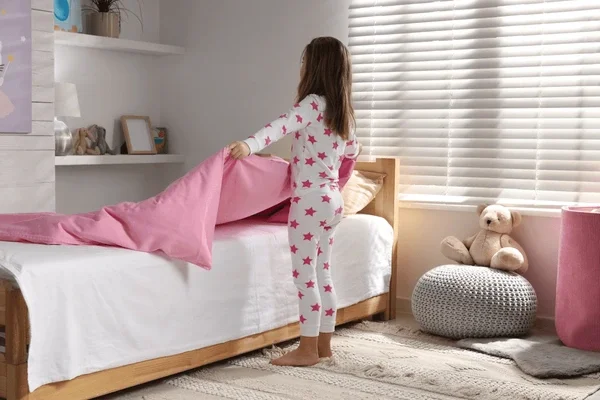
Your child's bedroom is worth prioritizing. They spend eight or more hours there nightly, and that's time spent breathing air that's close to where they're sleeping. The furniture, textiles, and finishes in this room deserve attention.
The kitchen is another high-priority space. Where food is prepared and stored, where your family gathers. The materials touching food and water matter significantly.
Living spaces where your family congregates daily are worth addressing. The couch they sit on while watching movies, the table where they eat breakfast, the air they breathe while playing.
Bathrooms and utility spaces, while important, can wait if your timeline is limited. Focus energy on the spaces that impact daily life most directly. This isn't giving up on those other spaces. It's working systematically, starting where you'll see and feel the most difference.
The Swaps That Matter Most
Not all changes are created equal. Some swaps reduce toxic exposure dramatically. Others are nice-to-have improvements. Start with the high-impact changes.
Swap 1: Synthetic Air Fresheners for Natural Alternatives
Synthetic air fresheners mask odors with fragrance chemicals rather than addressing problems. Many contain phthalates that aren't even listed on labels. Open windows provide fresh air rather than just different smells.
Simple swap: Open windows daily, even in cold months, for fifteen minutes. Use simmering water with lemon, cinnamon sticks, or herbs. A bowl of baking soda absorbs odors without chemical fragrance. Fresh-cut flowers or herbs in vases provide natural scent.
This swap costs almost nothing and immediately improves air quality. Start here.
Swap 2: Solid Wood Furniture Over Particle Board
This is where AlderBourn connects directly to your health goals. Particle board and MDF in children's furniture off-gas formaldehyde for years. Solid wood does not.
A single piece of solid wood furniture doesn't transform your home overnight. But it's a meaningful swap, especially for furniture in spaces where children spend significant time breathing nearby air.
Simple swap: When replacing a dresser, bookshelf, or storage piece in your child's room, choose solid wood. Yes, it costs more upfront. But it lasts longer, doesn't off-gas chemicals, and potentially serves multiple children or gets passed down.
Prioritize furniture in bedrooms first. Sleep spaces where your child is inhaling the air eight hours daily matter most.
Swap 3: Glass and Stainless Steel Food Storage Over Plastic
Plastics leach chemicals into food, especially with heat and time. Glass and stainless steel containers store food safely without contaminating it.
Simple swap: As plastic containers break or wear out, replace them with glass. Buy a few glass containers now rather than replacing everything simultaneously. New food storage purchases should prioritize glass over plastic.
This swap compounds over time. It's not an overnight change, it's a gradual transition toward safer food storage.
Swap 4: Reducing Heavily Fragranced Products
Synthetic fragrances are in shampoos, soaps, lotions, laundry detergents, fabric softeners, and cleaning products. Exposure to fragrance chemicals happens multiple times daily.
Simple swap: Start with one product category. Switch to fragrance-free or naturally-scented laundry detergent. Switch to unscented soaps. Find a deodorant without synthetic fragrance. Pick one change, establish it, then move to the next.
This doesn't mean your home has to smell like nothing. It means choosing products where scent comes from natural sources like essential oils rather than synthetic chemicals.
Swap 5: Washable Natural Fiber Textiles Over Synthetics
Bedding, curtains, blankets, and clothing made from natural fibers like cotton, linen, and wool don't off-gas the way synthetic materials do. They're also washable, which matters for durability and hygiene.
Simple swap: When replacing sheets or blankets, choose natural fiber options. They cost slightly more but last longer and don't deteriorate the way lower-quality synthetics do. Focus on bedding first since children sleep on it nightly.
Over time, natural fiber textiles throughout your home become the norm rather than the exception.
Swap 6: Improving Airflow and Opening Windows
Better air circulation is free and immediately effective. Open windows when weather permits. Use fans to circulate air. Crack windows slightly even in winter to maintain some air exchange.
Simple swap: Open bedroom windows at night, even if just a few inches. Your child sleeps better with fresh air circulation. Open windows while cooking to remove cooking odors and moisture. Simple ventilation is one of the most underutilized toxin-reduction strategies.
This costs nothing but develops the habit of prioritizing fresh air.
Swap 7: Being Mindful of Plastics in Children's Spaces
Toys and play equipment made from plastic off-gas chemicals. Extensive plastic in a room creates chemical-off-gassing spaces.
Simple swap: When replacing worn toys, choose wood or natural materials where possible. Rotate plastic toys out, rotate wooden alternatives in. This isn't about eliminating all plastic immediately. It's about gradually shifting toward more natural materials.
Over years, the percentage of plastic in their play spaces naturally decreases.
Swap 8: Creating Calmer, Less Cluttered Environments
Clutter creates stress. Visual chaos affects the nervous system. Simpler, more organized spaces are literally calming.
Simple swap: Spend fifteen minutes each day organizing one area. Make it visually calmer. The less stuff demanding attention, the more peaceful the space feels. This reduces stress, which supports overall health.
A calm environment is less "toxic" to your nervous system than a visually overwhelming one.
How to Actually Implement These Changes
Understanding what to swap isn't the same as actually making swaps. Here's how to make change stick.
Start with one swap per month
Trying to change everything simultaneously creates overwhelm and failure. Pick one swap this month. Get comfortable with it. Next month, add another. By the end of a year, you've made twelve meaningful changes without the upheaval of trying to transform everything at once.
This approach builds momentum and makes lasting change sustainable.
Prioritize spaces where impact is highest
Don't swap out every plastic toy in the house this week. Swap toys in your child's bedroom first because that's where they sleep eight hours daily. One room at a time. One space at a time. Systemic progress.
Focus on replacement rather than purging
You don't need to throw away perfectly functional items that contain chemicals. As they wear out, replace them with better alternatives. This is financially responsible and doesn't create waste.
A worn-out plastic storage container gets replaced with glass. A broken plastic toy doesn't get replaced. The plastic slowly leaves your home through normal replacement cycles.
Don't aim for perfection
Your home won't be toxin-free. Complete elimination is impossible and trying creates stress that negates the benefits. The goal is reducing exposure to what you can control, not achieving impossible perfection.
Some plastic will remain in your home. That's okay. You're reducing, not eliminating.
Celebrate progress
Notice when you've made swaps. "We've replaced our kitchen food storage with glass." "Our child's bedroom now has solid wood furniture." "We open windows daily." Progress is meaningful even if it's not perfect.
The Realistic Timeline
Creating a truly non-toxic home doesn't happen in weeks. It happens over months and years. This is actually good news because it makes the changes sustainable.
Year one: Establish habits (opening windows, reducing synthetic fragrances, starting to swap food storage). Prioritize one child's bedroom with solid wood furniture if feasible.
Year two: Continue gradual product swaps. Address another bedroom or main living space. Build on established habits.
Year three and beyond: Additional improvements compound. Your home environment progressively becomes cleaner, less toxic, more intentional.
This timeline feels manageable because you're not revolutionizing everything simultaneously. You're making consistent, thoughtful progress.
A Downloadable Checklist to Track Progress
We've created a simple checklist you can download and share that helps you track these swaps. It's not meant to create pressure or perfectionism. It's meant to help you see the progress you're making and stay organized as you work through changes.
The checklist includes all eight swap categories with space to note when you've made each change. Print it. Put it on your fridge. Check boxes as you go. Share it with friends who are also working toward healthier homes.
Download the Non-Toxic Home Swaps Checklist
The Bigger Picture
Creating a healthier home isn't about perfection or judgment. It's about thoughtfully reducing exposure to chemicals you can avoid while accepting that some exposure is inevitable and normal.
It's about prioritizing the spaces that matter most rather than trying to address everything simultaneously. It's about making swaps gradually as items wear out rather than overwhelming yourself with simultaneous changes.
It's about progress over perfection, consistency over intensity, and building sustainable habits that create meaningful change over time.
Health-conscious parenting isn't about being perfect. It's about being intentional. Making thoughtful choices. Moving in the direction of healthier, cleaner spaces. Progress matters far more than perfection.
Start with one swap this month. See how it feels. Next month, add another. By next year, you'll look back and notice how much has changed. Not through dramatic overhaul, but through consistent, thoughtful small changes.
That's how lasting change actually happens.
Which swap feels easiest to start with? What's holding you back from making changes you want to make? Share your thoughts in the comments. We'd love to hear what's resonating with you.
Download the Non-Toxic Home Swaps Checklist to track your progress. Free printable to help you work toward a healthier home at your own pace.
Looking for solid wood furniture to swap out particle board pieces in your child's room? Our wardrobe is handcrafted from solid alder with zero-VOC finish, designed to replace cheap alternatives while supporting healthier home environments. Join our email list for launch notifications at www.alderbourn.com.
