
Montessori-Inspired Activities for the Rainy Day
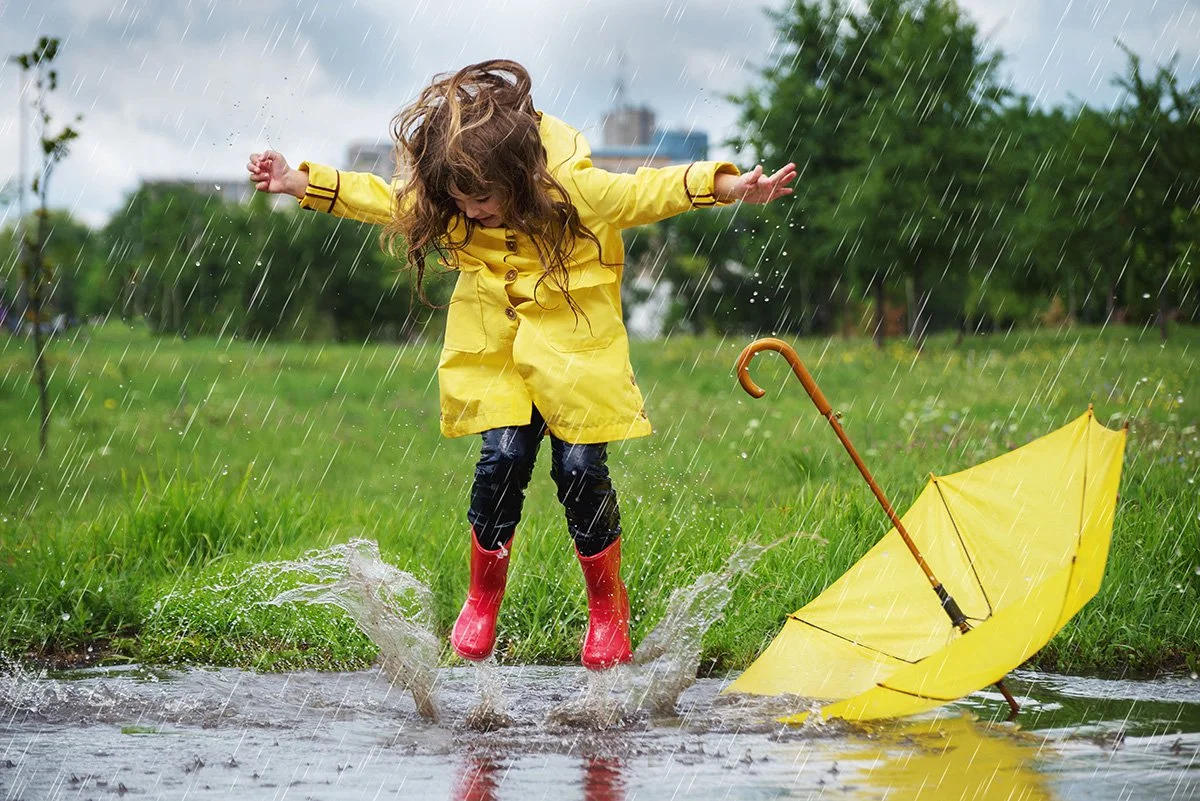
The rain starts around 9 AM. Your carefully planned outdoor day evaporates. The backyard is mud. The park is a puddle. The sidewalk chalk is dissolving. Your children look at you with that expression you dread: "What are we going to do?"
Your instinct is to scramble. Pull up Pinterest. Search for elaborate craft ideas. Gather seventeen supplies. Set up a complicated project that requires your constant supervision. Or, more honestly, hand over the tablet and accept that today is a screen day.
But rainy days don't have to be emergencies you survive or concede to screens. They can be some of the richest days of summer when you approach them with the right mindset and a little preparation.
The Montessori approach offers something valuable here: the belief that children are naturally curious and capable, that simple materials create deep engagement, and that everyday activities like pouring water or folding towels are genuinely interesting to young children when presented thoughtfully. Rainy day activities don't need to be elaborate, expensive, or adult-directed. They need to be accessible, inviting, and real.
Most of what you need is already in your kitchen.
The Montessori Mindset for Rainy Days
Before pulling out supplies, shift your thinking. The Montessori approach to rainy days isn't about keeping children entertained. It's about creating conditions where they can engage independently with meaningful activities.
This means resisting the urge to direct every moment. When you set up an art invitation, you don't need to tell them what to draw. When you create a sensory bin, you don't need to demonstrate the "right" way to play. When you offer practical life activities, you don't need to correct every imperfect attempt.
Your role is setup and availability, not constant facilitation. Prepare the environment. Make materials accessible. Then step back and let children discover, explore, and create on their own terms.
This also means accepting that some activities will last five minutes and others will last forty-five. Children's engagement is unpredictable. The activity you spent twenty minutes preparing might hold attention for three minutes, while a bowl of dried rice and some cups becomes an hour of absorbed play. Follow their lead rather than your expectations.
Rainy days actually support this beautifully. The world outside is quiet and gray. The energy naturally turns inward. Children who are usually racing around outdoors often settle into focused, calm activities when the weather removes the pull of outside play. Lean into this rather than trying to recreate outdoor energy levels indoors.
Sensory Bins from Your Pantry
Sensory bins are the workhorse of Montessori-inspired rainy day play, and they require almost nothing you don't already own.
The simplest version: a shallow bin or baking dish filled with dried rice. Add a few cups, spoons, funnels, and small containers. That's it. Children will pour, scoop, fill, and transfer for remarkable stretches of time. The repetitive motions are calming. The sensory input is satisfying. The play is entirely self-directed.
Dried oats work similarly and feel different. The texture is softer, the sound quieter. Switching between rice one rainy day and oats the next creates novelty from nearly identical setups.
Dried pasta in various shapes adds visual and tactile variety. Different shapes pour and scoop differently. They make different sounds. Children notice these differences and explore them with genuine curiosity.
Water bins work beautifully if you're comfortable with potential mess. A shallow bin of water with cups, funnels, basters, and small containers. Lay towels underneath. The pouring and transferring skills children practice are the same ones they'll use at mealtimes. This is play that builds practical capability.
Natural materials elevate sensory bins when you have them. Pinecones, smooth stones, large seeds, shells collected from trips. Adding natural items to a rice bin creates a sorting and discovery experience. Children separate, categorize, and examine with genuine focus.
The setup takes three minutes. The cleanup takes five. The engagement can last an hour or more. This is the kind of activity-to-effort ratio that makes rainy days manageable.
Place the bin on a child-height table or on a towel on the floor. Accessibility matters. If the bin is on the kitchen counter where children need to stand on tiptoe, they can't fully engage. At their level, on a surface where they're comfortable, the activity works.
Practical Life Activities That Feel Like Play
The Montessori concept of "practical life" activities is built on an observation that sounds counterintuitive to modern parents: young children genuinely enjoy real work.
Pouring practice is engaging for toddlers and preschoolers in ways adults don't fully appreciate. Two small pitchers and a tray. Pour water (or dried beans for less mess) from one to the other. Back and forth. This isn't busywork. It's concentration practice, fine motor development, and the deeply satisfying experience of mastering a skill.
Scooping and transferring with different sized spoons, tongs, or tweezers builds fine motor control. Set up two bowls and a tool. Transfer cotton balls with tongs. Scoop dried beans with a small spoon. The simplicity is the point. Children can repeat these activities independently because the process is clear and self-correcting.
Folding towels, washcloths, or small clothing items is a rainy day activity that genuinely surprises parents. Most assume children will resist folding. But when presented as an invitation rather than a chore, with a small basket of washcloths and a clear demonstration of how to fold, many children find the repetition calming and the neatly folded result satisfying.
Kitchen activities appropriate to age provide some of the richest rainy day engagement. Washing vegetables. Tearing lettuce for salad. Stirring batter. Spreading butter on bread. Measuring ingredients. These are real tasks with real outcomes that children can see, touch, taste, and take pride in.
Cleaning activities sound absurd as play suggestions, but watch a two-year-old with a spray bottle of water and a cloth. They will wipe surfaces with intense focus and satisfaction. A small broom and dustpan. A damp cloth for wiping a table. These tools, when sized for small hands and accessible without asking, get used voluntarily and enthusiastically.
The key to practical life activities working on rainy days is treating them as invitations, not assignments. Set out the materials attractively on an accessible surface. Don't say "Let's practice folding." Just leave a basket of washcloths on a low table and see what happens.
Art Invitations Without the Pinterest Pressure
Art on rainy days doesn't require elaborate projects, expensive supplies, or adult-directed instruction. It requires materials set out accessibly and the freedom to use them however the child chooses.
A few crayons and blank paper on an accessible table is a complete art invitation. No coloring books with lines to follow. No templates to fill in. Just open-ended materials and freedom. The drawings might be scribbles or masterpieces or something that makes sense only to the child. All of these are exactly right.
Washable paint with a few brushes and paper creates an elevated art experience without significant mess risk. Tape paper to the table (or to a window for light-table effect on gray days). Set out two or three paint colors. Walk away. Children paint best when not observed or directed.
Stickers and paper provide surprising engagement for younger children. The fine motor work of peeling stickers and placing them is genuinely challenging for small hands. A sheet of stickers and blank paper can occupy a preschooler for longer than you'd expect.
Cutting practice with child-safe scissors and scrap paper builds fine motor skills and provides sensory satisfaction. The act of cutting is inherently engaging. You don't need to provide cutting templates. Strips of paper to cut into pieces, then maybe glue the pieces onto another paper. The process matters more than the product.
Playdough or modeling clay on a tray with simple tools (a rolling pin, cookie cutters, a butter knife for cutting) creates an open-ended sculpting station that requires zero adult involvement once set up.
The Montessori principle here is process over product. Don't ask "What is it?" Don't evaluate the artwork. Don't display only the "best" pieces. Let children create without the pressure of producing something recognizable or impressive. Rainy days are for exploration, not exhibition.
Building Stations for Open-Ended Play
Building materials are among the most reliably engaging rainy day options because they're inherently open-ended. There's no right answer. No instructions to follow. Just materials and imagination.
Wooden blocks are the classic for good reason. Simple geometric shapes that can become anything: towers, castles, cities, bridges, enclosures for small animals, roads for tiny cars. The possibilities are literally limitless, which is why blocks sustain engagement across ages and across entire rainy afternoons.
Magnetic tiles add construction possibilities that blocks alone don't offer. Flat surfaces connect to create three-dimensional structures. The magnetic connection is satisfying. The translucent colors create visual interest. Children who might not gravitate toward traditional blocks often find magnetic tiles compelling.
Loose parts (bottle caps, smooth stones, wooden rings, fabric scraps, cardboard tubes) combined with blocks or tiles create a building ecosystem rather than a single activity. The loose parts become windows, people, food, decorations. They transform building from construction into storytelling.
Cardboard boxes deserve special mention on rainy days. Save boxes from deliveries. Provide tape and markers. A large box becomes a house, a car, a boat, a rocket. Smaller boxes stack, nest, and combine. This costs nothing and creates engagement that expensive toys often can't match.
Set building materials on a low table or a clear floor space where constructions can remain standing. If children know their building will be destroyed at cleanup time, they're less invested. When possible, let rainy day creations stand until the next day. The ongoing project becomes something they return to and expand.
Rainy Day Baking
Baking combines practical life skills, sensory experience, math concepts, patience, and a delicious outcome. It's one of the most complete rainy day activities available.
Simple recipes work best for children's participation. Muffins. Banana bread. Simple cookies. Pancakes for a rainy day brunch. Choose recipes with few ingredients and forgiving techniques where exact measurements aren't critical.
Children's participation varies by age but is possible at every stage. An eighteen-month-old can dump pre-measured ingredients into a bowl. A three-year-old can stir, pour, and help measure with supervision. A five-year-old can follow simple steps with verbal guidance. An eight-year-old can handle most of a simple recipe with minimal oversight.
The mess is part of the experience, not a failure. Flour on the counter. Batter drips. Eggshell fragments. These are the textures and challenges of real cooking. Involving children in cleanup afterward (wiping counters, washing bowls) makes the mess part of the learning rather than something adults silently handle.
Use the waiting time (while muffins bake, while dough chills) as a natural transition to another activity. Start a sensory bin while cookies are in the oven. Read a book together while banana bread bakes. The built-in waiting periods in baking teach patience and create natural rhythm to the rainy day.
The finished product creates genuine pride. A muffin you helped bake tastes better than one that appeared magically from the store. Sharing baked goods with family or neighbors gives children the experience of contribution and generosity. This is practical life activity at its most complete.
Reading Corners for Gray Day Magic
Rainy days and reading corners are natural partners. The gray light, the sound of rain, the indoor coziness create perfect conditions for settling in with books.
If you don't already have a reading corner established, a rainy morning is the perfect time to create one. A few pillows on the floor near a window. A blanket. A basket of books with covers facing forward. The setup takes five minutes and creates a space that serves for the rest of summer.
Rotate the books in the basket to keep the selection fresh. Three or four displayed face-out, swapped weekly. Include a mix of familiar favorites and books they haven't seen recently. The combination of comfort and novelty creates the ideal reading invitation.
Read aloud during rainy afternoons as a family ritual. Not as a formal reading lesson. Just the pleasure of sharing a story while rain falls outside. Children who associate reading with cozy, connected moments develop stronger reading habits than children who experience reading primarily as homework.
Audio stories paired with the reading corner create independent listening experiences for children who aren't yet reading on their own. A simple audio player with story recordings lets them "read" independently, building the habit and the love even before the skill arrives.
The reading corner works best when it's genuinely comfortable and genuinely accessible. This means child-sized seating or cushions they can arrange themselves. Books at their height, not shelved above their reach. Lighting they can control. A space that belongs to them rather than requiring adult setup each time.
Rotation Keeps Rainy Days Fresh
If every rainy day features the same activities, engagement diminishes. This is where toy and activity rotation becomes especially valuable.
Keep a designated "rainy day bin" that rotates separately from everyday toys. Activities in this bin appear only when rain cancels outdoor plans. The scarcity makes these materials special. Children associate rain with access to things they don't see every day, which reframes rainy days from disappointing to exciting.
Rotate the rainy day bin monthly or after every few rainy days. Swap the sensory bin filling (rice this time, oats next time). Change the art supplies (paint this time, collage materials next time). Rotate the building options (blocks this time, magnetic tiles next time). Same concept, fresh execution.
Store the rainy day bin somewhere accessible so you can deploy it quickly when weather changes plans. A closet shelf, a spot under a bed, anywhere you can grab it without a production. The faster the transition from "it's raining" to "here are your options," the less time children spend in the boredom-to-screen pipeline.
The rotation principle also applies to books in the reading corner, practical life setups, and baking recipes. Variety within simple categories keeps rainy days engaging across an entire summer of unpredictable weather.
The Rainy Day That Works
The perfectly executed rainy day looks something like this: Children wake up, see rain, and feel anticipation rather than disappointment because they know rainy days bring special activities. They eat breakfast independently. They discover the sensory bin set up at their table and engage for thirty minutes. They transition to art supplies already accessible on a low shelf. After lunch, quiet reading time in their cozy corner. Afternoon baking together. Building with blocks until dinner. Evening cleanup and a story read aloud with rain on the windows.
No screens. No elaborate planning. No Pinterest projects requiring thirty-seven supplies. Just simple, accessible, Montessori-inspired activities flowing through the day with enough variety to sustain engagement and enough calm to prevent overstimulation.
This doesn't happen perfectly every time. Some rainy days will still involve screens. Some activities will flop. Some moments will require your direct involvement. That's fine. The goal isn't a flawless rainy day. The goal is a rainy day where children can engage meaningfully and independently for significant stretches because the environment supports them.
The Montessori insight that makes all of this work is disarmingly simple: children don't need elaborate entertainment. They need accessible materials, freedom to explore, and adults who trust them to engage with real activities in their own way.
The rain isn't the enemy of a good summer day. Boredom, inaccessibility, and the absence of compelling alternatives to screens are. Solve those problems with simple setups, accessible spaces, and the trust that your child can engage with a bowl of rice, a set of watercolors, or a basket of books just as deeply as with any screen.
What are your family's favorite rainy day activities? What simple setups have surprised you with how long they held your child's attention? Share your rainy day wins in the comments.
Child-accessible furniture makes rainy day independence possible. When materials, books, and activities are at their height on surfaces they can use, children engage instead of asking for screens. Explore furniture designed for independence at www.alderbourn.com.
