
Different Ways to Use the Cosmos Collection in Your Home
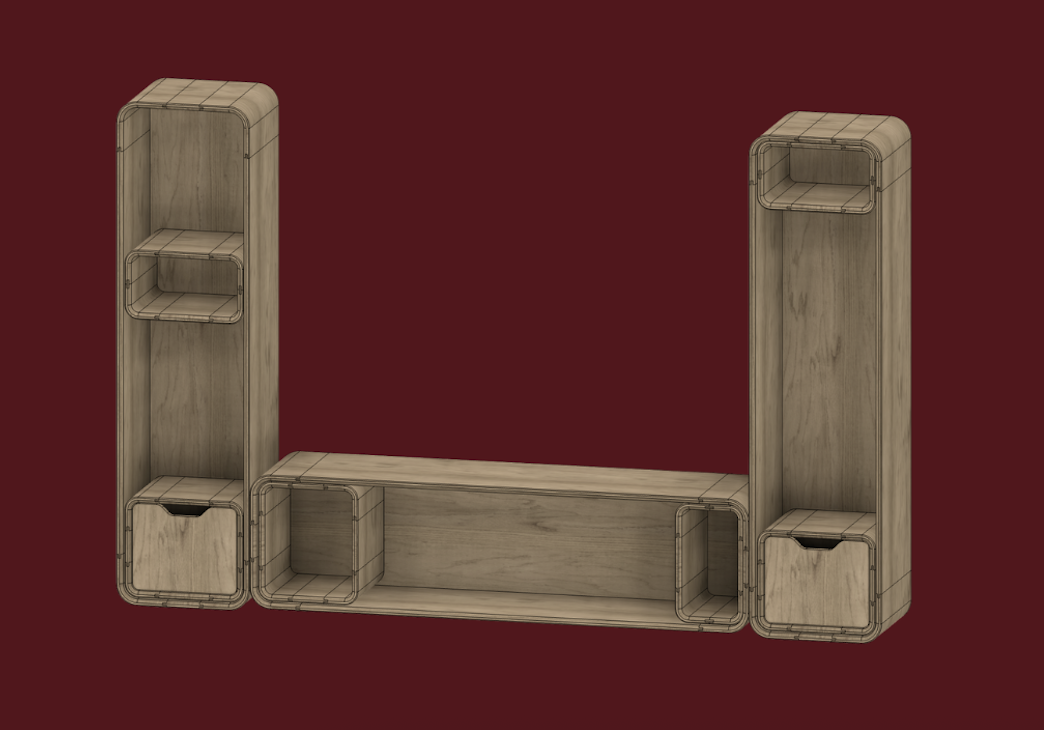
When we designed The Cosmos Collection, we kept coming back to one observation: children's furniture almost always serves one purpose in one room for one brief stage of childhood. The toddler dresser lives in the nursery until it's outgrown. The preschool bookshelf stays in the playroom until it's too small. The changing table becomes useless the moment diapers end.
We wanted to build something different. Furniture that moves through your home as naturally as your family moves through life. Pieces that serve one purpose today and a completely different purpose tomorrow. Furniture that belongs in whatever room needs it most right now, not locked into the room where it was first placed.
The Cosmos Collection was designed around this flexibility. Solid alder construction, timeless proportions, and intentional design details that make every piece functional in multiple configurations, in multiple rooms, at multiple stages. The way you use these pieces this year might look nothing like how you use them three years from now. That's not a compromise. That's the entire point.
Here's how families are actually using The Cosmos Collection throughout their homes, and how you might not have considered using it in yours.
In the Bedroom: The Foundation
The most obvious placement for The Cosmos Collection is in your child's bedroom, where it serves the daily routines of getting dressed, getting organized, and getting ready for the day.
The wardrobe oriented horizontally for younger children puts everything at their level. The hanging rod holds the week's clothing choices within arm's reach. The drawer stores pajamas, underwear, and socks they can retrieve independently. The cubby becomes the landing spot for shoes, a small bag, or tomorrow's outfit laid out the night before.
Morning routines that used to require your constant involvement become something your child manages themselves. They open the wardrobe. They choose an outfit. They get dressed. They put pajamas in the drawer or the laundry. The furniture facilitates a process that builds independence and confidence with every single morning.
As children grow, the same wardrobe shifts to vertical orientation. The silhouette changes. The capacity adjusts. The hanging rod now accommodates longer clothing. The drawer holds more. The cubby serves whatever the current stage demands. The bedroom evolves without requiring new furniture.
Paired with other pieces from the collection, the bedroom becomes a complete system. Accessible book storage means bedtime reading is self-directed. Surface space at the right height means homework, drawing, or quiet activities happen independently. The room functions as a space your child can fully operate in without needing you to reach, open, or retrieve anything for them.
In the Living Room: Shared Space That Works for Everyone
Here's where most children's furniture fails completely. It looks like children's furniture. Bold colors, rounded cartoon shapes, plastic finishes that scream "kid zone" in the middle of your carefully considered living space. You tolerate it because your child needs it, but it never belongs.
The Cosmos Collection was designed with shared spaces in mind. The natural alder finish, clean lines, and timeless proportions mean these pieces look intentional in a living room, not like a compromise you made for the sake of your children.
A shelving piece from the collection against a living room wall holds your child's current books, a few activity bins, and some treasured items on the lower shelves while upper shelves hold family books, plants, or decorative objects. The piece serves the whole family rather than fragmenting the room into adult and child zones.
The wardrobe in a living room or family room might seem unconventional, but for families without mudrooms or spacious entryways, it becomes the landing zone that every household needs. Oriented horizontally near the front door, the hanging rod holds coats. The cubby catches shoes or bags. The drawer stores hats, gloves, scarves, and the small items that otherwise scatter across every surface. Suddenly your entryway functions because there's furniture purpose-built for what actually happens when people walk through the door.
Living room placement also keeps children's materials accessible during the hours when families are together. After school, on weekends, during evenings when everyone's gathered, your child can independently access books, art supplies, or activities without disappearing to their room or asking you to get things from storage. They're present in the family space because the family space accommodates them.
In the Kitchen: Where Independence Gets Practical
Kitchen placement might be the most underestimated use of The Cosmos Collection. Families who move a piece into or near the kitchen consistently report it as the change that made the biggest difference in daily life.
A shelving piece near the kitchen becomes the snack station that transforms your afternoons. The lower shelves hold approved snacks in containers your child can open. A small pitcher and cups live on an accessible surface. The setup eliminates the dozens of daily interruptions that come from children needing you to get them food or water. They serve themselves. You keep cooking, working, or simply existing without constant requests.
The same piece holds kitchen tools your child uses when helping with meals. Their apron on a hook. A small cutting board. Child-safe utensils. Measuring cups. When these tools have a designated, accessible home, children can participate in kitchen activities without you assembling everything for them first.
For families who homeschool or whose children do homework at the kitchen table, a Cosmos Collection piece nearby stores school supplies, books, and materials that would otherwise clutter counter space. Everything has a home. The kitchen table clears quickly because supplies go back to their designated spot rather than accumulating on every surface.
In the Playroom: Curated Over Chaotic
Playrooms often become dumping grounds. Every toy the family owns piled into one room that's overwhelming to play in and impossible to clean. The Cosmos Collection brings intentionality to play spaces.
Shelving from the collection creates visible, accessible storage that supports toy rotation. This week's selection sits at child height, clearly visible and easy to retrieve. Rotation bins on higher shelves or in closets wait for their turn. The open design means children can survey their options and choose independently rather than digging through overflowing bins hoping to find something.
The wardrobe in a playroom serves purposes you might not initially consider. The hanging rod becomes the dress-up station, holding costumes and play clothes at child height. The cubby stores the current creative project or building in progress. The drawer holds art supplies, puzzle pieces, or small toys that need contained storage.
Surface space from the collection provides the work area every playroom needs. A surface at child height where puzzles get assembled, art gets created, and building happens. When the work surface is part of the same design family as the storage, the room feels cohesive rather than cobbled together from mismatched pieces.
The visual calm that The Cosmos Collection creates matters more in playrooms than anywhere else. Natural wood tones and clean lines provide a neutral backdrop that lets the toys and activities provide the color and stimulation. This is the opposite of most playroom furniture, which adds visual noise to an already stimulating environment. The calm furniture creates a calmer play experience.
In the Nursery: Starting from Day One
For families building a nursery, The Cosmos Collection offers something conventional nursery furniture can't: a future beyond infancy.
The wardrobe oriented horizontally at its lowest profile serves as a changing station alternative with real longevity. A changing pad on top creates a functional diaper-changing surface. The drawer holds diapers, wipes, and supplies. The cubby stores extra clothing or burp cloths. The hanging rod holds the tiny outfits waiting to be worn.
When diapers end (and they will end), the furniture doesn't become obsolete. Remove the changing pad and you have a fully functional wardrobe that serves your child from toddlerhood onward. The same piece that held diapers now holds independently chosen outfits. This is the opposite of a traditional changing table, which becomes useless within two years and ends up at a yard sale.
Shelving in the nursery starts as a display for books you read to them and items that personalize the space. As your infant becomes a toddler, those same shelves transition to accessible book storage and toy display. The nursery becomes a toddler room without a furniture overhaul.
In the Guest Room: Furniture That Earns Its Keep
Spare bedrooms and guest rooms often accumulate furniture that sits unused between visits. The Cosmos Collection pieces earn their presence in these rooms because they serve multiple purposes.
The wardrobe in a guest room provides closet space for visitors while functioning as overflow storage for the household between visits. The hanging rod holds guest robes or hangers ready for visitors. The drawer stores extra linens. The cubby holds items guests might need.
When you're not hosting guests, the same wardrobe stores seasonal clothing, extra bedding, or household items that need accessible but out-of-the-way storage. The piece works constantly rather than sitting empty waiting for visitors.
If the guest room doubles as a play space, craft room, or home office (as most spare rooms do), Cosmos Collection shelving provides organizational infrastructure for whatever the room's primary daily use happens to be.
In Shared Bedrooms: Defining Territory
For siblings sharing a room, The Cosmos Collection creates defined personal space within shared territory. This is one of its most powerful applications.
Two wardrobes on opposite walls give each child their own clothing management system. Their wardrobe is theirs. Their hanging rod, their drawer, their cubby. In a shared room where "mine" and "yours" constantly needs reinforcing, individual furniture pieces create unambiguous personal zones.
The orientation flexibility matters especially in shared rooms where space is tight. One child's wardrobe might be horizontal to fit under a window. The others might be vertical in a narrow wall section. Same furniture, different configurations, both optimized for the available space.
Shelving pieces can similarly be allocated individually. Each child gets their own section or their own piece. Their books, their treasures, their display space. The consistency of the collection's design creates visual unity in the room while the individual assignment creates personal territory.
Growing and Moving Through Your Home
The most powerful aspect of The Cosmos Collection isn't how it works in any single room. It's how pieces move through your home over years as needs change.
The wardrobe that starts in the nursery moves to the toddler's bedroom when a new baby arrives. Then perhaps to the living room as an entryway piece when the child outgrows needing it in their room. Then back to the teenager's room when they want more clothing storage. Then to a college apartment. The furniture travels through your home and through your child's life.
Shelving that starts holding board books transitions to holding chapter books, then textbooks, then a young adult's personal library. The same piece, serving the same function, holding completely different contents at each stage.
A piece that serves as a play station in the living room at age three becomes a homework station at age eight, a creative workspace at twelve, and a display surface for a teenager's evolving interests. The furniture doesn't change. What it holds and how it's used changes entirely.
This is what "grows with your child" actually means when it's not just marketing language. The furniture is genuinely useful at every stage because the design serves fundamental needs (storage, display, surface, organization) rather than age-specific functions.
The Design Details That Enable All of This
This flexibility isn't accidental. Specific design decisions make multi-room, multi-purpose, multi-year use possible.
The proportions are deliberately neither too childish nor too adult. A piece that looks appropriate in a nursery and in a teenager's room requires careful sizing that serves both without fully committing to either. We spent significant time refining dimensions that feel right at every stage.
The natural alder finish works in any room's color scheme and design aesthetic. A white or pastel finish would look juvenile in a living room. A dark stain might feel heavy in a nursery. Natural wood with zero-VOC oil finish is genuinely neutral. It works with modern interiors, traditional homes, farmhouse aesthetics, and minimalist spaces. It doesn't dictate your style. It complements whatever style you have.
The solid construction means the furniture physically survives being moved, reconfigured, and used hard for decades. Particle board furniture that wobbles after two years can't be repurposed because it can't survive the transition. Solid alder with proper joinery stays tight and stable through dozens of moves and reconfigurations.
The intentional simplicity means no piece is limited by ornamental details that tie it to one age or aesthetic. No carved teddy bears that make it "baby furniture." No trendy hardware that dates it to a specific year. No design elements that make it appropriate for one stage and awkward at another. Just clean, purposeful design that stays relevant indefinitely.
How to Think About Placement
If you're considering The Cosmos Collection and wondering where to start, here's a practical framework.
Start with the room where independence would make the biggest difference in your daily life. For most families, that's the child's bedroom (morning routines) or the kitchen area (snacks and meals). Place your first piece where it solves the most pressing daily friction.
Then observe how your family uses it. After a few weeks, you'll see patterns. Maybe you realize a second piece near the front door would solve the coat-and-shoes chaos. Maybe you notice your child would use living room shelving for books if it were available. Let observation guide expansion.
Think about the next two years, not just today. Where will this piece serve you best as your child grows? If you're currently in the nursery stage, you might place the wardrobe there knowing it will move to the toddler room in eighteen months. Planning for the next move helps you commit to placement without anxiety about it being permanent.
Remember that nothing is permanent. One of the advantages of furniture that looks appropriate everywhere is that you can experiment. Try the wardrobe in the living room for a month. If it doesn't work there, move it. The flexibility applies to you as much as to the furniture.
More Than Furniture
When a single piece serves your family in three different rooms over ten years, it stops being furniture and becomes part of your family's infrastructure. The wardrobe your toddler learned to dress themselves from. The shelves that held the books that taught your child to read. The surface where art was created, homework was completed, and birthday cards were written.
The Cosmos Collection was designed to become this kind of presence in your home. Not furniture you notice because it's flashy or trendy. Furniture you rely on because it works, wherever you need it, however you need it, for as long as you need it.
That's what versatile, intentionally designed furniture actually means. Not a marketing claim about flexibility. A genuine reality where pieces serve your family in ways you haven't imagined yet, in rooms you haven't considered, for years you haven't planned for.
Your home will change. Your children will grow. Your needs will evolve. The Cosmos Collection is designed to change, grow, and evolve with all of it.
Where would you place The Cosmos Collection first? What room in your home would benefit most from furniture designed for independence? Share your ideas in the comments.
The Cosmos Collection by AlderBourn: solid alder, zero-VOC finish, handcrafted in North Carolina. Versatile furniture designed to move through your home and grow with your family. Explore the full collection at www.alderbourn.com.
