
Where Do You Even Start with Montessori?
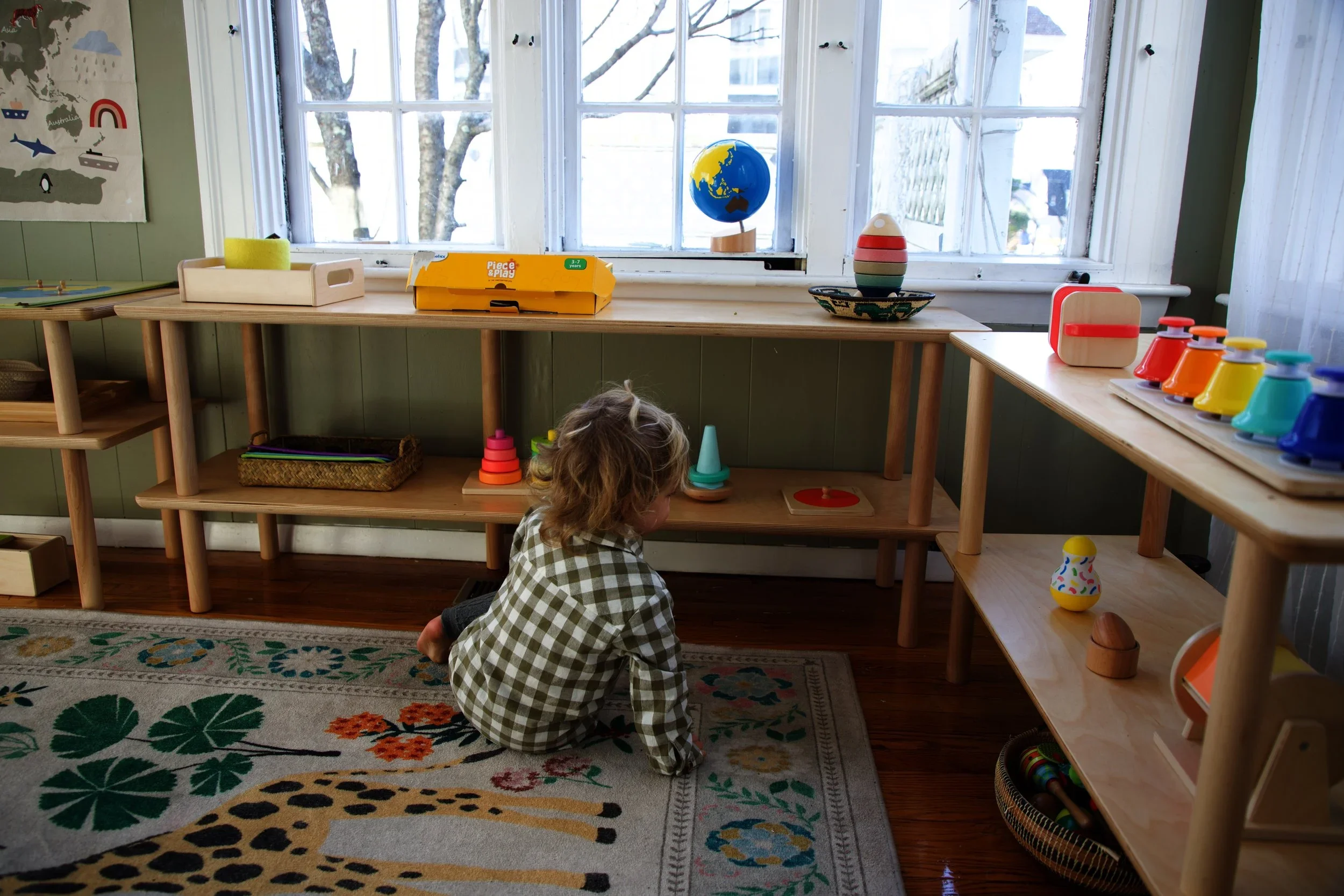
You searched "Montessori at home" and now you're drowning. One blog says you need a floor bed immediately. Another insists on a specific type of shelf. Someone on Instagram has a perfectly curated playroom with wooden toys organized by color on furniture that costs more than your first car. A Facebook group is debating whether your child's plastic sippy cup is undermining their developmental potential.
You close the laptop feeling worse than before you opened it. You were curious about Montessori because the core ideas resonated with you. Independence. Respect for children. Following their natural development. Trusting their capabilities. These principles felt right. But the internet transformed a beautiful philosophy into an overwhelming shopping list, and now you feel like you need a second mortgage and a degree in child development just to get started.
Here's what nobody tells you when you first encounter Montessori: it's not about the stuff. It's not about the furniture, the wooden toys, the specific shelf arrangement, or the aesthetic. Montessori is a mindset about how you see your child and how you set up their world to support who they already are. Everything else is just implementation detail.
You can start today. With what you already have. In the home you already live in. Without buying a single thing.
Montessori Is a Lens, Not a Checklist
Maria Montessori didn't design an interior decorating style. She observed children carefully and noticed something that changed education forever: children are naturally driven to learn, explore, and develop independence when their environment supports it and adults get out of the way.
That's really it. The entire philosophy rests on two principles. First, children are capable and naturally motivated to develop. Second, the environment (physical space, available materials, and adult attitudes) either supports or hinders that development.
Everything you see online that looks like "Montessori" is just people interpreting those principles through specific furniture, toys, and arrangements. Some interpretations are wonderful. Some are performative. Many are commercial. The aesthetic you see on Instagram is one expression of the philosophy, not the philosophy itself.
This matters because it frees you from the pressure of doing Montessori "right." There is no perfect Montessori home. There are homes where parents respect their children's capabilities and gradually adjust the environment to support independence. That process looks different for every family, every home, and every child.
You don't need to transform your entire house overnight. You don't need to replace all your furniture. You don't need to purge every plastic toy and replace it with hand-carved wooden alternatives. You need to shift how you think about your child's capabilities and start making small changes that let them do more for themselves.
The Five Places to Actually Start
If Montessori is a mindset, where do you begin applying that mindset practically? Start with five areas that create immediate, visible change in your child's daily life. Not all five at once. Pick one. See how it goes. Add another when you're ready.
1. Let Them Get Dressed
This single change transforms mornings and builds confidence faster than almost anything else you can do.
Most children's clothing is stored in adult systems. High rods in closets they can't reach. Deep drawers they can't open. Outfits chosen and laid out by parents every morning. The child is a passive recipient of clothing decisions rather than an active participant.
The Montessori shift: put a small selection of weather-appropriate clothing somewhere your child can independently access it. This could be a low drawer, a small section of closet with a lowered rod, a few hooks on the wall, or a child-height wardrobe. Limit choices to avoid overwhelm. Five outfits that all work is better than a full wardrobe requiring complex decisions.
Then step back. Let them choose. Let them dress themselves, even if the outfit is mismatched, even if it takes fifteen minutes, even if they put their shirt on backward. The independence matters more than the aesthetics.
At AlderBourn, this is exactly why we designed The Cosmos Collection wardrobe with a hanging rod, drawer, and cubby that children can access independently. The entire getting-dressed process becomes theirs. But you don't need our wardrobe to start. A few low hooks and a basket of clothes works for today.
2. Make Snacks and Water Accessible
Children ask for snacks constantly. Not because they're exceptionally hungry, but because getting food requires adult help. The dependency creates both interruption for you and helplessness for them.
The Montessori shift: create a small snack station your child can access independently. A low shelf in the pantry with approved options. A small pitcher of water they can pour themselves. A cup they can reach. Simple foods that don't require preparation (fruit, crackers, cheese sticks, granola bars).
This doesn't mean unlimited access to everything in the kitchen. It means curated, appropriate options they can manage themselves. You control what's available. They control when and how much.
The first time your child gets their own snack without asking, you'll understand why this matters. They feel capable. You feel relieved. Everyone wins.
3. Lower One Thing
Look around your home and find one item your child uses daily that requires adult help to access. Then lower it.
Maybe it's their toothbrush, moved from the medicine cabinet to a cup on the counter they can reach. Maybe it's their water cup, moved from an upper cabinet to a lower one. Maybe it's their favorite books, moved from a high shelf to a basket on the floor. Maybe it's their coat hook, moved from adult height to their height.
One thing. Lowered. Today.
This seems almost absurdly simple, but the cumulative effect of lowering things over time is transformative. Each item moved to child height is one less moment of dependency throughout the day. Over weeks and months, as you lower more and more items, your child's environment progressively shifts from adult-centered to child-accessible.
You don't need to renovate. You need to relocate.
4. Observe Before Directing
This is the hardest shift because it's entirely internal. The Montessori approach asks you to watch your child before telling them what to do or how to do it.
When your child is trying to put on their shoes, your instinct is to help. Instead, observe. Are they trying a strategy? Are they figuring it out? Are they frustrated or focused? Often, what looks like struggling is actually learning. Jumping in too quickly communicates "you can't do this," even when your intention is to help.
Start with five minutes a day of pure observation. Watch your child play without directing. Watch them attempt tasks without intervening. Notice what they're capable of that you've been doing for them. Notice where they're genuinely stuck versus where they just need more time.
This observation reveals your child's actual capabilities, which are almost always more than you assumed. It also reveals where your help is genuinely needed versus where it's just habit.
5. Involve Them in Real Work
Montessori is built on the insight that children want to participate in real life, not just play pretend versions of it. They don't want a toy kitchen. They want to help in the actual kitchen. They don't want to pretend to clean. They want to actually clean with real tools.
Start including your child in one daily household task. Cooking, cleaning, laundry, gardening, setting the table. Whatever task you can modify slightly to include them.
This inclusion needs to be genuine. Not performative participation where they "help" while you do everything. Actual tasks with actual contribution. A two-year-old can put napkins on the table. A three-year-old can wash vegetables. A four-year-old can help load the dishwasher. A five-year-old can fold simple laundry items.
The task will take longer with their help. The result will be imperfect. This is the cost of building capability. Accept it. The child who helps imperfectly today becomes the child who helps competently next year and the teenager who contributes meaningfully to household functioning.
What You Don't Need to Start
The internet will tell you that starting Montessori requires specific purchases. Here's what you actually don't need right now.
You don't need a floor bed. Traditional cribs and beds work fine. If your child is happy and safe in their current sleeping arrangement, changing it isn't urgent. Floor beds are one Montessori approach to sleep, not a requirement.
You don't need to replace all toys with wooden versions. Plastic toys aren't developmental poison. If your child engages meaningfully with a toy, the material it's made from matters less than the engagement itself. You can gradually shift toward more open-ended, natural materials over time without purging everything.
You don't need specific Montessori materials. The pink tower, the cylinder blocks, the metal insets, these are classroom materials designed for trained guides. They're wonderful in school settings. At home, everyday objects and simple materials serve the same developmental purposes.
You don't need a perfect aesthetic. Montessori Instagram is beautiful but intimidating. Your home doesn't need to look like a catalog. It needs to function for your child. Mismatched furniture that's at the right height beats beautiful matching furniture that's inaccessible.
You don't need to do everything at once. The families who successfully adopt Montessori principles do so gradually, one change at a time, over months and years. The families who try to transform everything overnight burn out and abandon the approach.
Common First-Month Mistakes
Understanding typical pitfalls helps you avoid them.
Doing too much too fast is the most common mistake. Parents get excited, reorganize the entire house over a weekend, and overwhelm both themselves and their children. Start with one change. Live with it for a week. Add another. Gradual change creates lasting change.
Expecting immediate compliance misunderstands the process. When you give a child access to their clothing for the first time, they might choose the same shirt every day for two weeks. They might refuse to participate. They might make choices that frustrate you. This is normal. They're adjusting to a new dynamic. Patience matters more than immediate results.
Focusing on buying rather than observing misses the point entirely. If your first response to "I want to try Montessori" is to shop rather than to watch your child, you're starting with implementation before understanding. Observe first. Understand what your specific child needs. Then make changes based on what you've learned.
Comparing to other families undermines confidence. Every child is different. Every home is different. Every family's resources, constraints, and values are different. The family with the perfectly organized Montessori playroom might have a larger budget, more space, or a child at a different developmental stage. Their version of Montessori isn't the standard you need to meet.
Correcting your child's independent choices defeats the purpose. If you give them clothing independence and then criticize their outfit, you've given independence with one hand and taken it back with the other. Let their choices stand whenever safety isn't at stake.
Growing Into It Over Time
Montessori at home is a gradual evolution, not a one-time installation. Here's what the progression typically looks like.
Month one: Pick one area from the five starting points. Make one change. Observe the results. Adjust as needed. Get comfortable with this single shift before adding anything else.
Months two through three: Add a second area. Maybe you started with accessible clothing and now you're adding a snack station. Two changes working simultaneously. Daily life starts to feel slightly different as pockets of independence emerge.
Months four through six: You've been observing your child more carefully. You're noticing capabilities you didn't know they had. You start naturally lowering more items, involving them in more tasks, and stepping back from directing their play. The mindset shift is happening.
Months six through twelve: The principles feel natural rather than forced. Your home has gradually become more accessible without a dramatic overhaul. Your child has developed visible independence and confidence. You're making changes based on observation of your specific child rather than following internet checklists.
Year two and beyond: Montessori principles are just how your family operates. You naturally consider accessibility when arranging spaces. You instinctively step back before intervening. Your child continues developing independence because the environment and your mindset consistently support it.
This timeline isn't prescriptive. Some families move faster. Some move slower. The pace doesn't matter. The direction does.
When Furniture Actually Matters
We've spent this entire post saying you don't need to buy things to start Montessori. That's true. But there comes a point where the right furniture genuinely makes a difference.
When your child is consistently using accessible clothing but the system is held together with makeshift solutions (hooks on doors, baskets on floors, low dresser drawers that stick), investing in furniture designed for child accessibility makes the daily experience smoother and more sustainable.
When your home environment has shifted toward independence but the furniture itself creates friction (shelves too high, surfaces too tall, storage too heavy to use), upgrading to child-proportioned pieces removes the last barriers to genuine independence.
The Cosmos Collection exists for this stage. Not for day one of your Montessori journey, but for the point where you've embraced the philosophy and want furniture that fully supports it. Solid wood construction that lasts through childhood. Accessible storage that puts everything within reach. Surfaces at the right height for independent use. Zero-VOC finishes that align with the natural, health-conscious values many Montessori families hold.
Start with the mindset. Start with observation. Start with one small change. When you're ready for furniture that matches the independence you're building, we'll be here.
Download: Your First 5 Montessori Steps
We've created a simple checklist to help you begin. Not a shopping list. Not an overwhelming guide. Just five clear starting points with space to track your progress and note what you observe.
Download it. Put it on your fridge. Work through it at whatever pace feels right. Come back to it when you need a reminder that Montessori starts with small, intentional steps, not dramatic transformation.
Download "Your First 5 Montessori Steps" Checklist
The checklist is free, printable, and designed to be shared. If you know a parent who's curious about Montessori but feeling overwhelmed, send it their way. Sometimes all someone needs to start is permission to begin small.
Where are you in your Montessori journey? What's been the biggest surprise about implementing these principles at home? Share your experience in the comments.
The Cosmos Collection by AlderBourn: furniture designed for independence, built to last. When you're ready for furniture that matches your Montessori values, explore solid alder pieces handcrafted in North Carolina atwww.alderbourn.com.
