
What 'Handcrafted in North Carolina' Really Means
"Handcrafted" has become a marketing term slapped on everything from mass-produced furniture with one hand-applied detail to items that never saw human hands beyond packaging. "Made in America" often means final assembly happened domestically while components came from elsewhere. These phrases have been diluted to near meaninglessness by companies using them for marketing advantage without substance behind them.
When we say AlderBourn furniture is handcrafted in Winterville, North Carolina, we mean something specific. Not poetic marketing language. Not technical compliance with labeling laws. Actual hands-on craftsmanship happening in our workshop in eastern North Carolina.
Understanding what actually happens in our workshop, who does the work, and why location matters reveals the difference between furniture that's genuinely handcrafted and furniture that's merely marketed that way. This transparency isn't typical in the furniture industry, which prefers customers not think too carefully about how things are actually made.
But we believe you deserve to know. When you invest in AlderBourn furniture, you should understand exactly what you're paying for and why it costs what it does.
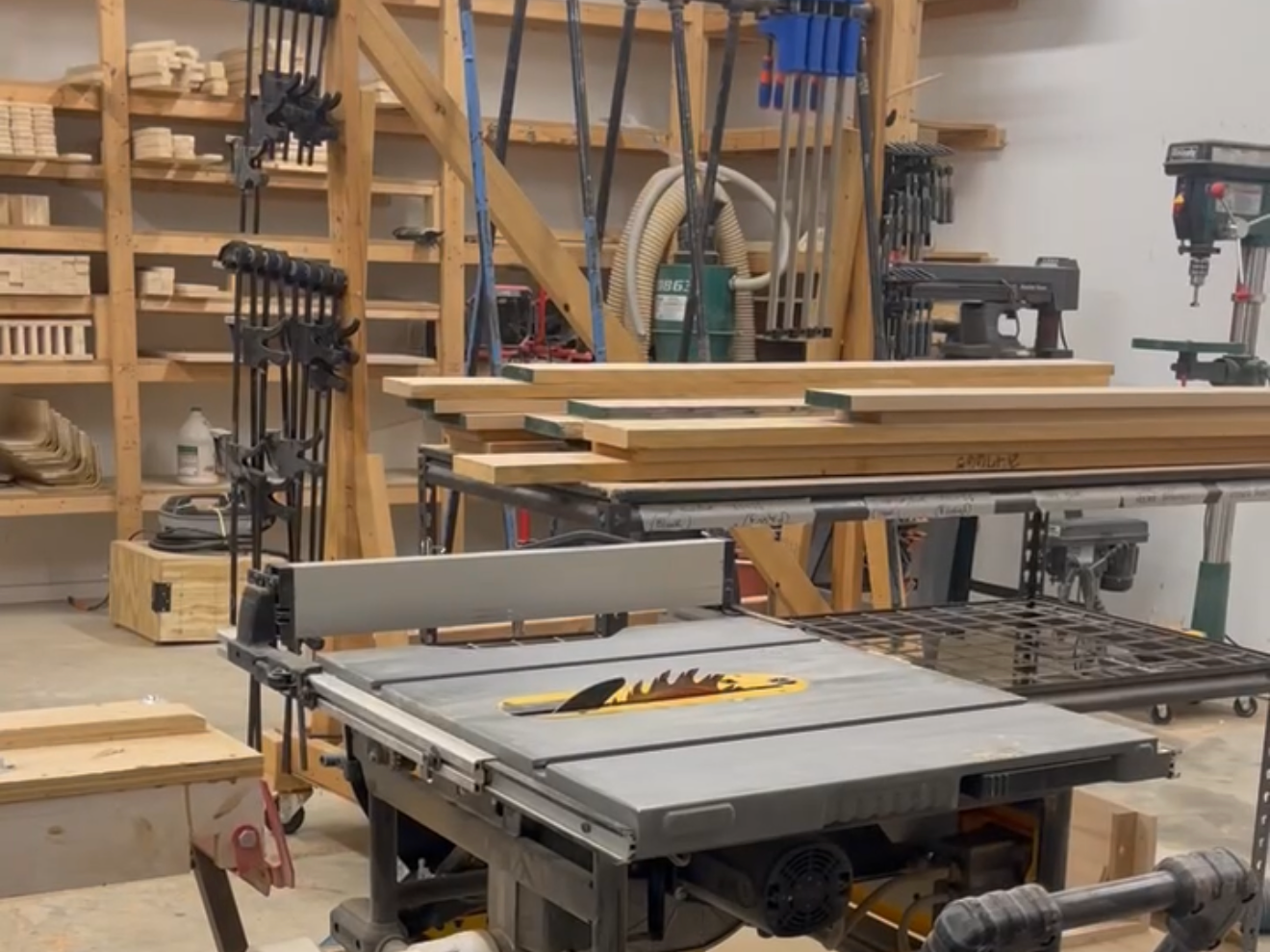
What Happens in Our Winterville Workshop
Our workshop sits in Winterville, North Carolina, a small town in Pitt County. This is where every piece of AlderBourn furniture is built from start to finish. Not assembled from pre-made components. Actually built.
Raw lumber arrives at our workshop. Solid wood boards in various species, depending on what we're building. Alder for many pieces. Oak when needed. Whatever wood is appropriate for that specific furniture. The lumber comes from mills, already dimensioned to standard sizes, but it's still raw wood that needs significant work to become furniture.
Cutting and milling happens here. We measure, mark, and cut each piece to the exact dimensions required for that specific furniture item. A shelf is cut to length. Table legs are cut and shaped. Every component is precisely milled to fit its purpose. No pre-cut kits. No components that arrive ready to assemble. We're starting with boards and creating furniture parts.
Joinery is created by hand in our workshop. Mortise and tenon joints for frame connections. Dado joints for shelving. Dowel holes drilled precisely. The connections that hold furniture together for decades are cut, shaped, and fitted here. This is skilled work that determines whether furniture stays tight and solid or loosens and wobbles.
Assembly happens piece by piece. Components are test-fitted, adjusted if needed, then glued and clamped. Joints are checked for tightness. Squareness is verified. Each piece sits in clamps while glue cures, often overnight. You can't rush this. Proper curing time is what creates joints that last.
Surface preparation takes longer than people realize. Every surface is sanded multiple times with progressively finer grits. We start at 80 or 100 grit to remove mill marks and level surfaces. Progress to 120, then 150, then 220 for final finish preparation. Between sanding stages, we apply GoodFilla wood filler to grain and any natural characteristics, then sand again. This preparation is what creates the glass-smooth surface you feel on finished furniture.
Finishing happens in stages over days. First the filler application and sanding. Then the first coat of Rubio Monocoat zero-VOC oil, worked into the wood and allowed to cure. Then buffing and a second coat if needed. The finish bonds with the wood rather than coating it, which takes time and technique. We can't rush this to meet artificial production schedules.
Quality inspection happens before anything ships. We examine every surface, test every joint, check every drawer and door if applicable. If something isn't right, it gets corrected before the piece leaves our workshop. Our name goes on this furniture. It needs to be something we're genuinely proud of.
The People Behind the Work
"Handcrafted" means actual human hands performing skilled work. Here's who does that work.
I oversee every piece personally. AlderBourn isn't a factory with hundreds of workers. It's a small workshop where I'm directly involved in production, quality control, and ensuring every piece meets our standards. When something has my name on it, I need to be confident in it.
We work with skilled craftspeople who understand woodworking at a level mass production can't replicate. These aren't assembly line workers following scripts. They're people who know how wood behaves, how joints should fit, how finishes should be applied. The expertise matters enormously in final quality.
Small-batch production means attention to detail that's impossible in mass manufacturing. When you're making thousands of identical units, cutting corners saves significant money. When you're handcrafting furniture one piece at a time, there's no incentive to rush. Each piece gets the attention and time it deserves.
Local employment matters to our identity. We're supporting skilled workers in eastern North Carolina. The paychecks from AlderBourn furniture stay in our community, supporting local families and the local economy. This isn't abstract. It's real people whose livelihoods depend on us building quality furniture that earns our reputation.
Why North Carolina Specifically
North Carolina has furniture-making heritage going back centuries. While much of that industry has moved overseas or shifted to mass production, the knowledge and skill base remains. Choosing to build furniture here connects us to that tradition.
The wood we use grows in forests not far from here. Eastern North Carolina has access to quality hardwoods from sustainable forestry. Short transportation distance from forest to mill to workshop reduces environmental impact and supports regional forestry economies.
Our workshop location allows direct customer relationships. When customers are within driving distance, some visit our workshop before ordering. They see how furniture is actually made, meet the people making it, and understand what they're buying. This transparency builds trust and accountability.
Being in North Carolina rather than overseas or in major manufacturing centers gives us flexibility. We can accept custom work, make adjustments, and respond to customer needs in ways large manufacturers can't. Small-batch production in a local workshop is inherently more adaptable than factory production optimized for volume.
What We Source and Why
Transparency requires honesty about what comes from where. Not everything in AlderBourn furniture originates in North Carolina.
The solid wood lumber we use comes primarily from American mills, with most from Southeastern forests. Some specialty woods or specific grades may come from other regions when local availability doesn't meet quality standards. We prioritize domestic lumber but won't compromise quality for geography claims.
Hardware components like drawer slides, hinges, and mounting hardware often come from specialized manufacturers outside North Carolina. Quality hardware requires precision manufacturing that small workshops can't replicate. We source from suppliers who meet our standards for durability and quality, prioritizing performance over origin.
Our finishing products come from specific manufacturers we trust. GoodFilla wood filler is made in America by Gork's GoodFilla. Rubio Monocoat originated in Belgium and is now produced both there and in the United States. We use these products because they're the best available for our zero-VOC commitment, not because of where they're made.
The distinction that matters is this: the craftsmanship, the skill, the assembly, the finishing, and the quality control all happen in our Winterville workshop. We source the best materials available globally when necessary, but the value-added work happens locally under our direct oversight.
What Handcrafted Actually Costs
Understanding what handcrafted means helps explain why AlderBourn furniture costs more than mass-produced alternatives.
Time investment per piece is dramatically higher. A bookshelf that takes two hours to assemble from a flat-pack kit might take twenty hours or more to handcraft from raw lumber. That time costs money, which gets reflected in the final price. You're paying for skilled labor, not just materials and assembly.
Small-batch production can't achieve the economies of scale that factories optimize for. When a factory produces ten thousand identical bookshelves, the per-unit cost drops dramatically. When we're handcrafting furniture one piece at a time, each piece carries full production costs. The math simply doesn't allow factory pricing.
Quality materials cost more than budget alternatives. Solid wood costs significantly more than particle board. Zero-VOC finishes cost more than conventional finishes. Quality hardware costs more than cheap slides and hinges. We're not cutting material costs to hit price points. We're using appropriate materials regardless of cost.
Domestic labor costs more than overseas labor. Skilled woodworkers in North Carolina earn living wages with fair working conditions. This is how it should be, and it's factored into our pricing. The alternative is exploiting cheap labor, which we reject.
Overhead for small workshops is higher per piece produced. We can't spread rent, equipment, utilities, and administrative costs across massive production volumes. Our overhead per piece is higher because we're producing fewer pieces. This is simply economic reality of small-batch production.
The price of AlderBourn furniture reflects actual costs of handcrafting quality furniture under fair labor conditions with quality materials. We're not inflating prices to create artificial luxury perception. We're charging what it costs to do the work right.
What Handcrafted Doesn't Mean
Transparency also requires clarifying what handcrafted doesn't mean in our context.
It doesn't mean zero power tools. We use table saws, planers, sanders, and other power equipment. Handcrafted means skilled hands guiding the work, not that everything is done with hand tools like 18th century cabinetmakers. Modern equipment allows precision and efficiency while maintaining craft quality.
It doesn't mean every piece is completely unique. We build to standard designs that we've refined over time. A bookshelf you order will look like the bookshelf in our photos because we're executing a proven design. Handcrafted doesn't mean wildly variable or unpredictable.
It doesn't mean rustic or imperfect. Our furniture is finished to professional standards. The surfaces are smooth. Joints are tight. Finishes are even. Handcrafted quality means excellence, not amateur work or deliberate imperfection marketed as character.
It doesn't mean we reject efficiency or modern techniques. We use jigs, templates, and systems that allow consistent results. We've developed processes that work. Handcrafted doesn't mean inefficient or wasteful. It means skilled humans controlling the process rather than automated systems.
Why We Are Sharing This
We're sharing all of this now because we want you to understand what you're looking at when new pieces go live.
When you see our new furniture, you'll know that what you're looking at was built in our Winterville workshop. Cut, joined, sanded, filled, finished, and inspected by people who care about the outcome. Using solid wood, quality hardware, and zero-VOC finishes that align with our values.
You'll understand why the pricing reflects what it does. Not because we're pursuing maximum profit margins, but because handcrafting quality furniture with fair labor practices and quality materials costs what it costs.
You'll know that when you invest in AlderBourn furniture, you're supporting skilled craftsmanship in eastern North Carolina. You're choosing furniture made by people who take pride in their work. You're selecting pieces built to last for decades rather than designed for replacement.
Most furniture companies avoid this level of transparency because it reveals uncomfortable truths about how most furniture is actually made. We embrace transparency because we're confident in how we build furniture and believe you deserve to know.
When you see what we're launching, you'll see furniture that's genuinely handcrafted in North Carolina. Not marketing language. Not technical loopholes. Actual craftsmanship you can trust.
The furniture speaks for itself. The construction quality is visible to anyone who looks closely. The finish quality is obvious when you touch it. The solid wood construction is apparent in the weight and feel. But understanding what handcrafted actually means helps you appreciate what you're looking at.
What questions do you have about how furniture is made? What transparency matters most to you when choosing furniture? Share your thoughts in the comments!
