
The 10-Minute Daily Reset That Transforms Kids' Rooms
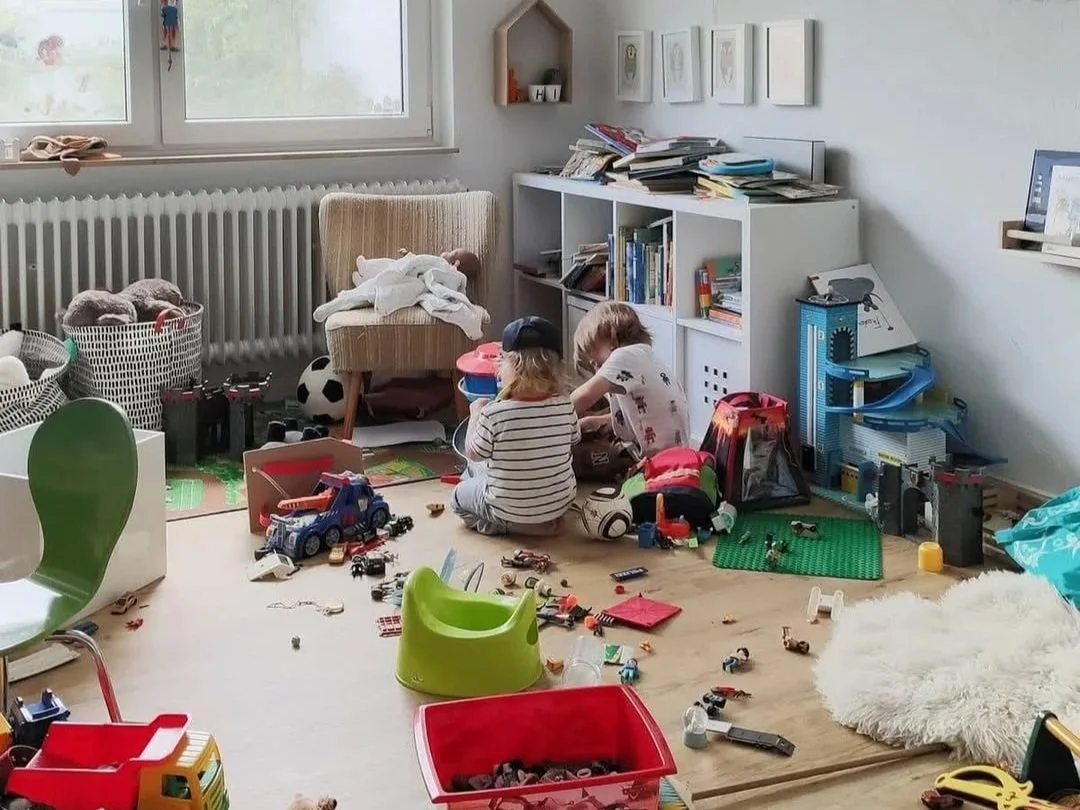
It's 7:30 PM. The kids are finally in bed. You walk past their bedroom and glance inside. Toys scattered across every surface. Books piled haphazardly. Clothes in mysterious locations. Art supplies migrated from wherever they're supposed to live. The room that was reasonably organized this morning has descended into chaos in just twelve hours.
You face a choice. Spend the next hour organizing everything properly, tackle it on the weekend, or just close the door and pretend you didn't see it. None of these options feels good. The hour-long deep clean is exhausting after a long day. Waiting until the weekend means living with chaos all week. Ignoring it means tomorrow starts with the same mess, which somehow makes everything harder.
Here's what most parents don't realize: you don't need an hour. You don't need a weekend overhaul. You need ten minutes. A specific, repeatable, daily reset that prevents chaos from accumulating without requiring massive time investment or energy you don't have.
The difference between a room that stays functional and a room that requires constant massive cleanup isn't better organization systems or more disciplined children. It's a brief daily reset that returns things to baseline before disorder becomes overwhelming.
Why Weekend Overhauls Fail
Before discussing the daily reset, understand why the "let it get messy then clean deeply on Saturday" approach doesn't work for most families.
Accumulated chaos is overwhelming to address. When toys have been scattered for five days, when clothes are everywhere, when art supplies have migrated to seven locations, the cleanup task is genuinely daunting. Even motivated children shut down when faced with that much disorder. Parents become exhausted just thinking about it.
Living with disorder all week creates stress. You can't find things when you need them. Getting dressed takes longer because clothes aren't where they should be. Bedtime routines are harder because the room feels chaotic. The disorder affects daily functioning, not just aesthetics.
Deep cleaning teaches the wrong pattern. When cleanup happens only weekly as a massive project, children learn that maintaining order isn't part of daily life. It's a special event, something that happens occasionally with great effort. This doesn't build habits that serve them long-term.
The cycle repeats endlessly. You spend two hours Saturday getting everything perfect. By Wednesday it's chaos again. By Friday you're dreading Saturday's cleanup. Nothing ever stays organized because nothing prevents daily accumulation.
The 10-Minute Reset That Actually Works
The daily reset isn't deep cleaning. It's not reorganizing. It's not perfecting. It's quickly returning the room to functional baseline before disorder accumulates.
Here's the specific process that works for most families:
Minute 1-2: Clothes
All clothes go to one of two places: laundry bin if dirty, proper drawer or closet if clean. That's it. Don't fold pajamas perfectly. Don't organize by color. Just get clothes off the floor and furniture into their designated zones. Speed matters more than perfection.
Minute 3-4: Books
Books return to the bookshelf. Not organized alphabetically. Not arranged by size. Just on the shelf rather than scattered across the room. If books are supposed to live in a basket or bin, fine. The point is books off the floor, off the bed, back to their home base.
Minute 5-6: Toys
This is where appropriate storage makes enormous difference. Toys return to their designated bins or shelves. Not sorted meticulously. Not organized by type unless your system makes that quick. Just blocks in the block bin, stuffed animals in their spot, vehicles wherever vehicles live. The goal is getting toys off the floor and furniture into storage.
Minute 7-8: Surfaces
Clear all horizontal surfaces of items that don't belong there. The desk, the dresser top, the nightstand. Remove cups or dishes to the kitchen. Put art supplies back where they live. Return items that belong elsewhere in the house to a basket by the door for later distribution. The goal is clearing surfaces so they're usable.
Minute 9-10: Floor Check and Fluff
Quick scan of the floor for anything missed. Straighten the bed covers (not make the bed perfectly, just pull the comforter reasonably straight). Close drawers that are hanging open. Push chairs back to desks. The room should look like someone lives there and cares for it, not like a showroom.
That's it. Ten minutes. The room isn't perfect. But it's functional. Tomorrow morning starts with a baseline that works rather than accumulated chaos.
The Timing That Makes It Stick
When the reset happens matters almost as much as doing it at all.
Before dinner works well for many families. Kids are tired but not completely exhausted. The reset marks the transition from active play time to evening routine. It creates a natural break and prevents the chaos of the day from extending into bedtime.
After dinner, before bath and bed works for others. The reset becomes part of the wind-down routine. It's not framed as cleaning but as preparing the room for tomorrow. Some children find this calming and prefer handling it after they've eaten and have a bit more energy.
The specific time matters less than consistency. Choose a time that works for your family's schedule and stick with it. Daily routine at the same time becomes automatic far faster than sporadic resets at random times.
Avoid doing resets when children are melting down tired. A two-year-old who's been awake since 6 AM cannot help reset their room at 8 PM. Adjust timing to match actual energy levels and capability.
Making It Work With Different Ages
The reset looks different depending on children's ages and capabilities.
Toddlers (18 months to 3 years) need you to do most of it while they "help." They might hand you items, put a few things in bins, or push toys toward storage. The reset is modeling the habit rather than expecting them to execute it independently. You're showing them that rooms get reset daily, building the foundation for future independence.
Preschoolers (3 to 5 years) can handle significant portions with verbal guidance and presence. "Let's put all the blocks in the bin together." "Can you put your books on the shelf while I get your clothes?" They're capable of the physical tasks but need adult direction and company. The reset happens with you, not by them alone.
Early elementary (5 to 8 years) can complete the reset mostly independently with initial supervision and occasional checks. "Time for your 10-minute reset. I'll check in when the timer goes off." They know the routine and can execute it with minimal adult involvement. Your job is maintaining accountability and offering help if they get stuck.
Older children (8 and up) should handle the reset completely independently. Your role is ensuring it happens, not managing every step. The reset is their responsibility, with natural consequences if they skip it. The room is harder to use tomorrow if they don't maintain it today.
The Furniture That Makes Resets Possible
Room resets work when furniture supports quick cleanup rather than complicating it.
Open shelving at child height means toys can be returned quickly. Children can see where everything belongs and reach storage independently. Closed cabinets that require opening doors slow the process and add steps. Simple shelving with bins or baskets allows fast cleanup.
At AlderBourn, we design furniture with this daily reality in mind. A bookshelf where children can actually see and reach books means books get returned during the reset rather than staying scattered. A table that's appropriately sized means papers and art supplies can be quickly cleared rather than left because reaching proper storage requires adult help.
Storage that's easy to use gets used during resets. Bins that are too heavy when full don't get used. Drawers that stick require adult help. Lids that are difficult to manipulate add friction. The easier the storage is to use, the more likely the reset happens successfully.
Furniture that stays stable matters during quick cleanup. When children are moving quickly during the ten-minute reset, furniture needs to be sturdy enough to handle being bumped, leaned on, or used for support. Wobbly furniture slows the process and creates safety concerns.
Designated homes for everything prevent the "where does this go?" paralysis. When every category of item has an obvious home, resets move quickly. When storage is ambiguous, children get stuck trying to decide where things belong. Clear homes for books, toys, clothes, and art supplies enable fast resets.
When the Reset Reveals Problems
Sometimes the daily reset exposes organizational issues that need addressing.
If the reset consistently takes longer than ten minutes, your storage system is too complicated. Simplify categories. Reduce the number of bins. Make homes more obvious. The reset should be quick and simple, not a complex filing task.
If certain items never make it back to their homes during resets, those items don't have good homes. Find better storage locations that make sense for how those items are actually used. Meet reality rather than forcing behavior to match your organizational theory.
If children consistently resist the reset despite it being routine, examine timing and energy levels. Maybe 7 PM is too late. Maybe right after school is too early. Adjust to match when children actually have the capacity to participate.
If the room is functional after the reset but still feels chaotic, you might have too much stuff present. Consider rotation systems or reducing the total volume of toys, books, and items. Ten-minute resets work when total volume is appropriate to the space.
The Compound Effect of Daily Resets
The power of the daily reset isn't in any single reset. It's in the compound effect of doing it consistently over weeks and months.
Daily resets prevent the accumulation that makes cleaning overwhelming. When things never get more than one day messy, cleanup never becomes daunting. This makes the room more pleasant to use and reduces everyone's stress.
Daily resets build habits in children that last beyond childhood. The adult who maintains their space didn't suddenly develop this skill at 20. They built it through years of daily resets as children. The habit becomes automatic through repetition.
Daily resets teach that maintenance is part of life, not an occasional event. Children learn that caring for spaces and belongings is normal daily activity, not special-occasion cleaning. This mindset serves them forever.
Daily resets reduce weekend cleaning dramatically. When the room stays relatively organized all week, weekends don't require hours of catch-up cleaning. Saturday morning doesn't start with overwhelming disorder that demands immediate attention.
Daily resets create breathing room in family life. When you're not constantly battling room chaos, when you're not spending hours on weekend cleaning marathons, you have time and energy for activities everyone actually enjoys.
Starting the Daily Reset Practice
If daily resets aren't currently part of your routine, implementation matters.
Start with one room, probably the most-used bedroom or play space. Don't try to implement resets for the entire house simultaneously. Master one space first, then expand if needed.
Set a timer for exactly ten minutes. This creates urgency and prevents the reset from expanding into a longer task. When the timer goes off, stop. Whatever's not done can be done tomorrow. The timer keeps the reset brief and manageable.
Do the first week together regardless of child's age. Even if your eight-year-old could do this alone, spend the first week modeling the quick reset. Show them what ten minutes of focused reset looks like. Demonstrate the speed and lack of perfectionism.
Lower your standards deliberately. The reset is not deep cleaning. Books don't need to be alphabetized. Toy bins don't need to be perfectly sorted. The bed doesn't need hospital corners. Good enough is the goal. Perfectionism kills sustainable habits.
Celebrate consistency over results. When your child completes the reset five days in a row, that's success regardless of how the room looks. The habit matters more than any single outcome. Consistency builds the pattern that becomes automatic.
The Reset As Family Rhythm
Eventually, the daily reset stops being a task and becomes simply what happens. The rhythm of the day includes the reset the same way it includes dinner and bedtime.
Children stop asking if they have to do it and just do it. The reset is part of daily life, not something imposed on them. It's as automatic as brushing teeth.
You stop having to remind and manage. The habit is established. Your role shifts from enforcement to occasional troubleshooting when something disrupts the routine.
The room stays consistently functional. Not perfect, but usable. Things can be found. Spaces can be used for their intended purposes. The baseline of order is maintained.
Your family has more time and energy. The hours previously spent on weekend cleaning marathons are freed up. The stress of living with constant disorder is gone. The mental load of managing chaos is lifted.
This is what sustainable organization looks like. Not complicated systems. Not extensive storage solutions. Not hours of weekly cleaning. Just ten minutes daily, returning a space to functional baseline before disorder accumulates.
The daily reset is the organizational equivalent of compound interest. Small daily investment creating enormous long-term return. Ten minutes today saving hours tomorrow. Consistency building habits that last a lifetime.
Do you have a daily reset routine in your home? What timing and approach works for your family? Share your experiences in the comments!
