
Teaching Kids to Love (Not Dread) Cleanup Time
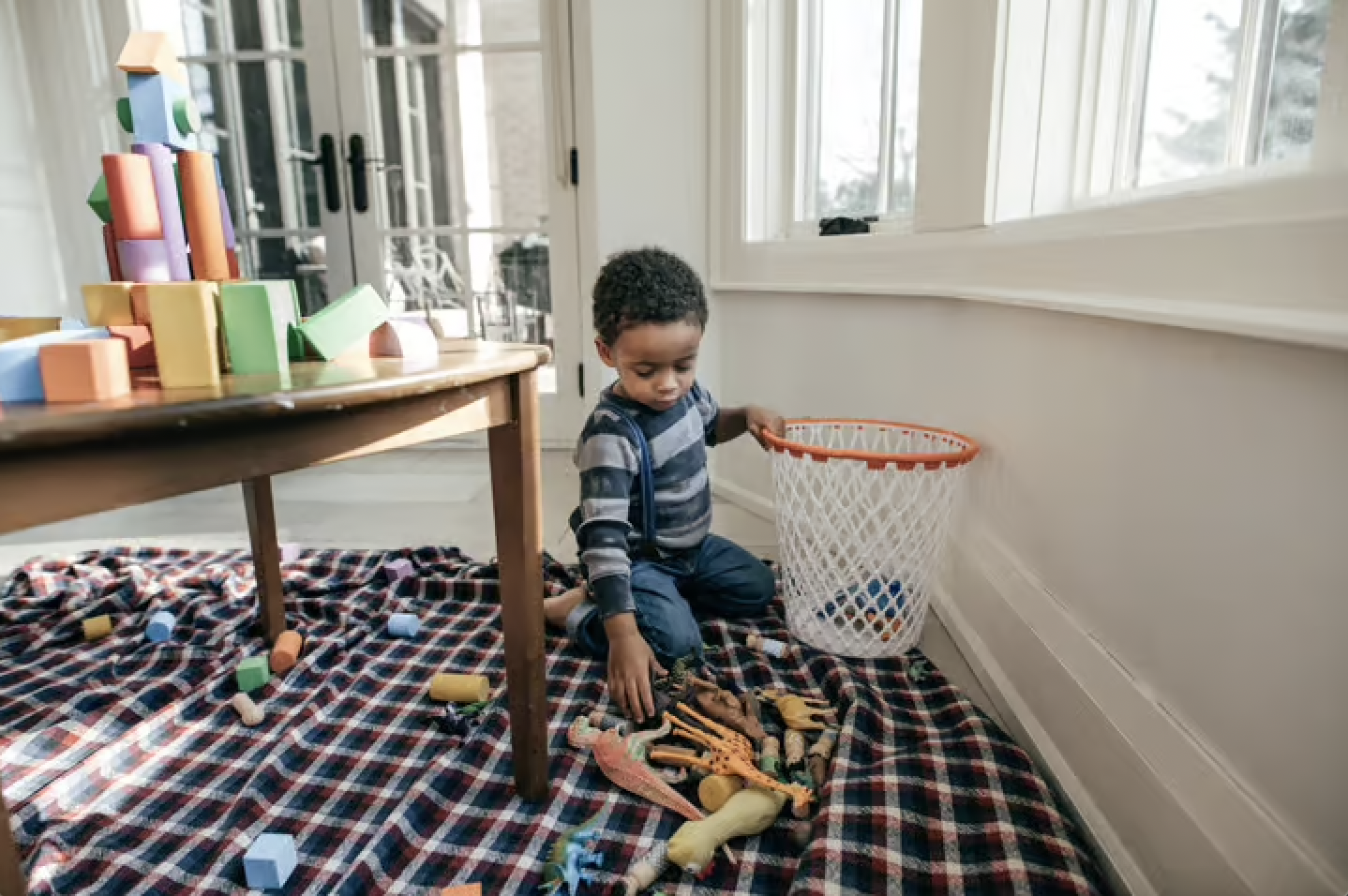
"It's time to clean up!"
You say these words, and your child's face falls. Maybe they ignore you entirely, suddenly deeply absorbed in a toy they hadn't touched in twenty minutes. Maybe they whine. Maybe they negotiate. Maybe they have a complete meltdown. What should be a simple five-minute task becomes a thirty-minute battle that leaves everyone exhausted and frustrated.
Meanwhile, you're doing the math in your head. If cleanup is this hard now with a preschooler, what happens when they're seven? Ten? Fifteen? Are you doomed to fight this battle twice a day for the next decade? Will your child grow up resenting chores and avoiding responsibility?
Here's what most parents don't realize: children's resistance to cleanup isn't about laziness, defiance, or poor character. It's usually about systems that don't work for them, expectations that don't match their capabilities, and a fundamental misunderstanding about how children learn to value order.
The good news? Children can not only tolerate cleanup—they can genuinely participate in it, even occasionally enjoy it. Not because you've found some magical bribery system, but because you've created conditions where cleanup makes sense to them and feels achievable. It starts with completely rethinking how cleanup works in your home.
Why Cleanup Becomes a Battle
Before we talk about solutions, let's understand why cleanup generates so much resistance. It's rarely because children are inherently opposed to tidiness. Usually, it's because we've accidentally set them up to fail.
The task is too big and undefined. "Clean up your room" is overwhelming. To an adult, this breaks naturally into subtasks—put away blocks, then books, then stuffed animals. But children don't automatically chunk tasks this way. They see an enormous mess and don't know where to start. Paralysis sets in. They literally don't know how to begin, so they don't.
The organizational system is too complex for their developmental level. If putting away toys requires knowing which of twelve labeled bins each item belongs in, your four-year-old will fail. Not because they can't clean up, but because you've created a filing system that requires adult executive function. Even adults struggle with overly complex organization—children have no chance.
Storage is physically inaccessible. Toys that belong on shelves the child can't reach. Bins that are too heavy when full. Drawers that require adult strength to open. Lids that are difficult to manipulate. When the organizational system requires adult assistance at every step, cleanup isn't something children do—it's something they need help with. The difference is everything.
Cleanup interrupts play at arbitrary moments. From the child's perspective, they're deeply engaged in building a city, creating a story, or exploring an idea. Then an adult announces "cleanup time" based on the clock, not based on natural stopping points in play. Cleanup feels like an interruption rather than a natural conclusion. Resistance follows.
There are no natural consequences. If an adult always does the cleanup eventually, or if the mess just stays there indefinitely, children learn that cleanup is optional. They might get nagged or punished, but the actual task doesn't have to happen. Without experiencing the real reasons we tidy—so we can find things next time, so we have space for other activities, so our environment feels calm—cleanup seems arbitrary.
The child has never experienced the satisfaction of a clean space they created themselves. If adults always "help" by doing most of the work, or if the child's efforts are immediately corrected, they never get to feel the pride and relief that comes from transforming chaos into order. They've never connected their effort with a positive outcome, so they don't understand why the effort matters.
Creating Cleanup Systems That Actually Work
Sustainable cleanup isn't about finding the right rewards or consequences. It's about designing systems that work with children's developmental capabilities and natural inclinations rather than against them.
Make the task concrete and manageable. Instead of "clean up your toys," try "please put the blocks in the blue bin." One specific action. One clear endpoint. Success is obvious. Once that's done, the next task: "now let's put books on the shelf." Break cleanup into a series of achievable tasks rather than one overwhelming instruction.
Use visual cues that show what "done" looks like. Take photos of each area when it's clean. Your child can reference these images to see exactly what cleanup means for that space. This removes ambiguity and provides a clear target. "Make it look like this picture" is concrete. "Clean up" is abstract.
Organize with broad, obvious categories. Blocks go here. Stuffed animals go there. Art supplies in this basket. Simple categories that a tired, distracted child can understand even at the end of a long day. Resist the urge to create complex subcategories that require sustained attention and good executive function.
Ensure every storage solution is accessible and easy to use. Bins at child height with no lids or easy lids. Shelves they can reach. Containers that aren't too heavy when full. The physical act of putting something away should require minimal effort. When cleanup is physically hard, children resist. When it's easy, resistance decreases dramatically.
At AlderBourn, we design furniture with this principle in mind. Open shelving at child height means children can see where things belong and easily return them. Sturdy, lightweight tables and chairs can be moved by children themselves if needed for cleanup. Storage that's built into furniture at accessible levels makes cleanup a natural part of using a space rather than a separate, complicated task.
Timing and Transitions That Reduce Resistance
When cleanup happens matters almost as much as how it happens. Poor timing creates unnecessary resistance even with good systems.
Give advance warning before cleanup. "We'll clean up in five minutes" lets children mentally prepare. Then a two-minute warning. Then "it's cleanup time now." This respects that they're engaged in something meaningful to them and allows for natural stopping points. Abrupt transitions create resistance; telegraphed transitions reduce it.
Build cleanup into natural transitions. Before meals. Before leaving the house. Before bath time. When cleanup is always paired with what comes next, it becomes part of the routine rather than a random interruption. Children learn the rhythm: play, clean up, eat lunch. Play, clean up, go to the park. The predictability reduces resistance.
Allow time for proper cleanup. If you announce cleanup five minutes before you need to leave for school, you've created a rushed, stressful situation. Children sense your urgency and panic. Build in adequate time—usually ten to fifteen minutes depending on the mess—so cleanup can happen at a reasonable pace without stress.
Respect when projects need to stay out. Not everything needs to be cleaned up immediately. If your child built an elaborate block structure and wants to continue tomorrow, that's valid. Create a way to protect ongoing projects—a spot where they can stay undisturbed. This shows respect for their work and reduces resistance because cleanup doesn't mean destroying what they created.
Use natural cleanup moments that make sense. After play with a specific toy, that toy gets put away before getting out something new. This prevents the accumulation of everything being out at once. It also connects cleanup directly to readiness for the next activity. You can't do puzzles if the table is covered with art supplies. Cleanup becomes practical, not punitive.
Teaching Cleanup as a Life Skill
The goal isn't just getting your house tidy today. It's raising someone who understands how to maintain their environment and values order. That requires teaching cleanup as a skill, not enforcing it as a rule.
Start early with simple tasks. Toddlers as young as 18 months can put toys in bins, throw trash in a low wastebasket, and help wipe spills. The tasks are imperfect, but the learning is real. Children who start participating in cleanup early develop the habit and competence. Those who are excluded until they're "old enough" never develop the foundation.
Model cleanup in your own spaces. Let children see you tidying your desk, organizing the kitchen, putting away your own belongings. Narrate what you're doing and why. "I'm putting my keys on the hook so I can find them tomorrow." This teaches that cleanup is what people do, not what children do because adults said so.
Acknowledge effort and improvement, not just results. "You worked hard putting all those blocks away" matters more than "the room is perfectly clean." Recognize persistence, problem-solving, and engagement with the task. This builds intrinsic motivation. Children learn that their effort has value regardless of perfect outcomes.
Let natural consequences teach when possible. If toys are left out and get stepped on and broken, that's unfortunate but educational. If art supplies are left scattered and can't be found next time creativity strikes, that's frustrating but instructive. Natural consequences teach the practical value of cleanup better than lectures or punishments ever could.
Avoid perfectionism that undermines confidence. If your child puts away books but they're not perfectly aligned, let it be. If toys go in the right bin but the bin looks messy inside, that's fine. Perfectionism teaches children that their effort is never good enough. Accepting "good enough" teaches them they're capable.
When Cleanup Still Meets Resistance
Even with good systems, children sometimes resist cleanup. That resistance often contains useful information if you're willing to decode it.
Persistent resistance might mean the system doesn't actually work for them. If your child consistently struggles to put away a specific category of toys, examine the storage. Is it accessible? Is it intuitive? Is there a better way? Sometimes what looks like defiance is actually a child showing you that your organizational system has a flaw.
Age-inappropriate expectations create frustration. A three-year-old can put toys in large bins. They cannot organize toys by size, color, and type simultaneously. A six-year-old can clean their room with verbal guidance. They cannot remember a ten-step cleaning routine without help. When resistance is constant, consider whether your expectations match developmental reality.
Sensory overwhelm triggers shutdown. Some children look at a messy space and experience genuine distress that prevents action. For these children, breaking tasks into tiny steps helps. "Pick up just the red items." Then "pick up three books." Manageable chunks prevent the overwhelm that causes shutdown.
Tiredness masquerades as defiance. Cleanup before bedtime when your child is exhausted will always be harder than cleanup after a rest. If timing is the issue, adjust when cleanup happens rather than fighting against a tired child's diminished capacity.
Real defiance requires connection first, then consistency. Sometimes children resist cleanup because they're seeking connection or testing boundaries. These situations need relationship before requirement. "You seem upset about cleaning up. Let's do it together today." Connection first. Then follow through on the expectation with supportive presence.
The Cleanup Routine That Becomes Habit
Sustainable cleanup happens when it's routine, not when it's enforced. Building that routine takes consistency, but the payoff is enormous.
Establish a daily reset time that's predictable. Maybe it's before dinner. Maybe it's right after school. The specific time matters less than the consistency. When cleanup happens at the same time daily, it becomes part of the rhythm of life. Resistance decreases because it's just what happens at this time, like brushing teeth or having dinner.
Use music or timers to make cleanup defined and finite. "We'll clean up until this song ends" or "cleanup time is ten minutes." This creates boundaries. Children can see the endpoint, which makes the task feel manageable. Cleanup isn't infinite—it's this amount of time, then it's done.
Make it collaborative when possible. Cleanup together, especially with young children. You put away books while they handle stuffed animals. You work side by side. This models that cleanup is a shared responsibility, teaches by example, and provides relationship time even during a practical task.
Celebrate when cleanup becomes routine. "You remembered to clean up without being reminded!" or "Our cleanup routine is really working well." Recognizing when systems work reinforces the behavior and builds children's confidence in their own capability.
Adjust as children grow and needs change. What worked for a three-year-old needs modification for a six-year-old. Expect to revisit and revise your cleanup systems every six months to a year. Growth is good. Systems should evolve with children's changing capabilities.
The Real Goal
The goal of teaching cleanup isn't having a spotless house. It's raising a human who understands that maintaining their environment is part of caring for themselves and participating in family life.
When children learn to clean up in ways that work for their developmental level, they learn much more than toy organization. They learn that they're capable. They learn that their actions create consequences—positive ones when they maintain order, frustrating ones when they don't. They learn that caring for belongings and spaces is part of respecting what they have.
They also learn that adults in their lives have reasonable expectations and will support them in meeting those expectations. That cleanup isn't about perfection or punishment—it's about creating environments where everyone can thrive.
Years from now, you won't remember every cleanup battle. But your child will remember whether cleaning felt like something they could succeed at or something they constantly failed at. They'll remember whether maintaining order felt like a life skill they developed or a burden imposed on them.
That memory matters. And it starts with the systems you create and the support you offer, beginning today.
What cleanup strategies have worked for your family? Share your successes and challenges in the comments!
