
New Year, New Room: Kid-Friendly Organization Resolutions
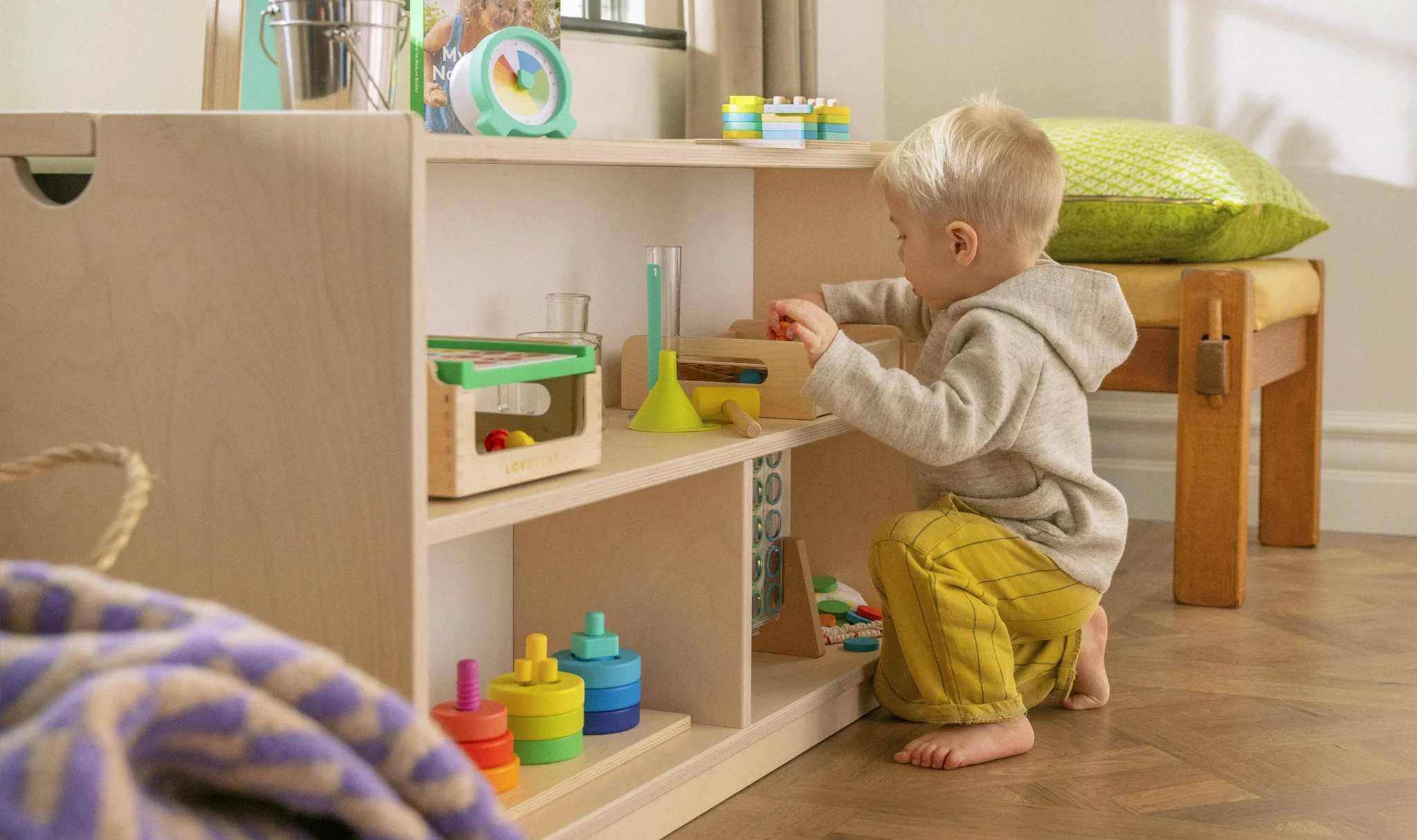
It's January, and you're staring at the aftermath. The holiday decorations are finally down, but now you can see what they were hiding: the sea of new toys covering every surface, the outgrown clothes still crammed in drawers, the art supplies that have somehow migrated to seven different locations, and the general chaos that accumulated while you were just trying to survive December.
Every January brings the same impulse—this is the year you'll finally get organized. You'll create systems. You'll maintain order. Your children's spaces will be functional and peaceful. You make mental lists of storage bins to buy, organizational systems to implement, and all the ways this year will be different.
But here's what usually happens: you spend a weekend purging and organizing with impressive intensity. It looks beautiful for approximately three days. Then reality sets in. The systems are too complicated. The kids can't maintain them. You're exhausted from managing everyone's stuff. And by February, you're right back where you started, maybe with some expensive storage containers you don't actually use.
The problem isn't your willpower or your children's cooperation. The problem is that most organizational resolutions are designed for adult brains and adult capabilities, then imposed on children who can't possibly maintain them. If you want organization that actually sticks, you need to start with systems children can use independently—and furniture that supports those systems.
Why New Year's Resolutions Fail for Kids' Spaces
Before we talk about what works, let's understand why most January organization efforts collapse. It's not because you're not trying hard enough or because your children are uniquely messy. It's because the approach is fundamentally flawed.
Most organizational systems are too complex for children to maintain independently. If putting away toys requires remembering which of twelve labeled bins each item belongs in, your four-year-old will fail. Not because they're incapable, but because you've created a system that requires adult executive function and attention to detail. Even adults struggle with overly complicated organizational schemes.
Many storage solutions are physically inaccessible to children. Toys in bins on high shelves that require a step stool. Clothes in drawers that are too heavy for small hands to open. Books stacked horizontally in a bin where only the top one is visible. These systems guarantee that children will need adult help for every retrieval and return, which means the system depends entirely on adult enforcement.
We often organize for how we wish children played rather than how they actually play. We create a beautiful toy rotation system, but our child wants to combine the blocks, the cars, and the stuffed animals in one elaborate game. We designate specific places for art supplies, but creativity strikes in the living room, not at the art table. When organization fights against natural behavior, behavior wins every time.
The biggest issue is that New Year's organizational purges happen to children rather than with them. Adults decide what to keep, what to donate, and where everything should go. Children wake up one day to find their space completely rearranged according to someone else's system. Even if the system is objectively better, children resist because they had no ownership in creating it.
Starting With What Actually Matters
If you're going to make organizational changes that stick, start by getting honest about your actual priorities. Not what organizing blogs tell you matters, but what genuinely impacts your daily life and your children's wellbeing.
Function over appearance should be your guiding principle. The perfectly color-coded, Instagram-worthy organization system that your children can't maintain independently is worse than a slightly messy system they can use themselves. Your goal isn't impressing guests—it's creating environments where children can find what they need and put it back without help.
Consider accessibility before everything else. If your children can't reach it, see it, or manipulate it themselves, the organizational system is already broken. Every storage solution should pass this test: Can my child independently get out what they need and put it back? If the answer is no, you're creating dependency instead of organization.
Think in categories that make sense to children, not adults. Adults organize by type—all the blocks together, all the animals together. Children often think in play schemas—things for building cities, things for pretend cooking, things for arts and crafts. Sometimes the best organization honors their mental categories, even if they seem illogical to you.
Prioritize zones over perfection. Instead of trying to organize every single toy, create defined zones for different activities. A building zone. A reading zone. An art zone. Within those zones, allow more flexibility in how things are arranged. This gives structure without requiring perfection.
The Furniture Foundation of Organization
Here's what most organizational advice misses: furniture determines what organizational systems are even possible. Before you buy another storage bin or label maker, look at whether your furniture is set up to support independence.
Low, accessible storage is the foundation of any organizational system children can maintain. This means open shelving at child height, drawers that children can open independently, and bins that aren't too heavy when full. At AlderBourn, every piece we design considers this principle—children should be able to access their belongings without adult help.
Child-sized furniture creates natural organization zones. A small table and chairs automatically becomes the zone for activities that happen sitting down—puzzles, art, snacks, homework. This natural zoning happens without you having to teach it because the furniture itself defines the purpose.
Stable, appropriately-sized seating reduces the clutter that accumulates from children using furniture incorrectly. When children have chairs they can move themselves, they don't drag adult chairs around, creating obstacle courses through rooms. When they have a comfortable place to sit that fits their body, they actually sit there instead of sprawling across floors with materials scattered everywhere.
Furniture with open shelving rather than closed cabinets makes everything visible. Children can see what they have and where it belongs. Closed storage might look neater, but it creates the "out of sight, out of mind" problem where children forget what they own and can't return items to places they can't see.
Lightweight, movable furniture allows flexibility as needs change. The table that's in the middle of the room today can move to a corner next month if you need to reconfigure. Organization that's locked in place by heavy furniture becomes a prison instead of a tool.
Age-Appropriate Organization That Grows
What works for a two-year-old creates chaos for a seven-year-old, and vice versa. Organizational systems need to match current developmental capabilities while having room to evolve.
For toddlers (18 months to 3 years), simplicity is essential. Large bins for broad categories—blocks, animals, vehicles. Pictures on labels since they can't read. Everything at floor level or on the lowest shelf. The goal isn't perfection; it's learning the concept that things have homes. A simple bookshelf with toys in bins they can reach and a small table for activities creates enough structure without overwhelming them.
Preschoolers (3 to 5 years) can handle slightly more complex systems. Bins for different types of toys, but still broad categories. A clothing system where they choose between two drawers—tops and bottoms—rather than organizing by type of shirt. Open shelving where they can see book covers rather than spines. They're developing the executive function for organization, but it's fragile—keep systems simple enough they can succeed.
Early elementary (5 to 8 years) can manage more sophisticated organization if it makes sense to them. They can use labels, understand subcategories, and maintain systems across multiple locations. This is when involving them in designing the organizational system becomes crucial. They'll maintain a system they helped create much better than one imposed on them. Their furniture can include a dedicated homework space, more complex storage for hobbies and collections, and systems that separate school supplies from play items.
Older children (8 and up) need organization that supports increasing independence and responsibility. They should be managing their own clothing organization, school supplies, and hobby materials. The focus shifts from bins of toys to storage for books, electronics, art supplies, and whatever their current interests demand. Their furniture needs should include proper desk space, flexible storage that adapts to changing interests, and systems that treat them as capable of sophisticated organization.
The New Year Purge: Doing It Right
If you're going to do a January organization overhaul, do it with children instead of to them. The process matters as much as the outcome.
Start by involving children in the assessment. Walk through their space together, asking what's working and what's frustrating. Where do things get messy? What can't they find when they need it? What do they wish they could reach? Children often have excellent insights about what's not working—they're the ones using the space daily.
Make donation decisions together for children old enough to participate (roughly 3 and up). Don't secretly purge while they're at school—that destroys trust. Instead, create a "maybe" box for items they're unsure about. Store it for a month. If they don't ask for anything in it, donate it together. This teaches decision-making while respecting their attachment to belongings.
Tackle one small zone at a time. Don't try to reorganize the entire bedroom in one weekend. Start with the bookshelf. Then the art supplies. Then the clothing. Completing small projects successfully builds momentum and doesn't overwhelm anyone. Plus, you can test whether systems work before replicating them everywhere.
Photograph the organized state together. Let children take pictures of how things should look. These become reference photos they can check when cleaning up. This works better than verbal reminders because they can see exactly what "clean" means for each zone.
Build in maintenance time before judging success. Every evening, spend ten minutes doing a quick reset together. Every weekend, spend thirty minutes on deeper organization. After a month of this, you'll know what systems work and what needs adjustment. Don't judge success or failure in week one.
Systems That Work With Real Life
The best organizational systems work with your family's actual patterns, not against them. Pay attention to where messes naturally accumulate—that's where you need solutions, not more rules about keeping things elsewhere.
Create landing zones where things naturally drop. If backpacks always end up on the floor by the door, put hooks at child height right there. Don't insist they belong in the bedroom closet if that's not where they naturally land. Meet reality where it is.
Use the rotation strategy for toys. Keep one bin of blocks accessible, store two others. Rotate every few weeks. This reduces visual clutter, makes the space feel fresh regularly, and you never have to decide what to get rid of permanently. Seasonal rotation works well too—outdoor toys accessible in summer, art supplies more prominent in winter.
Establish "homes" for items that migrate. Art supplies want to travel? Create mini art kits in multiple locations—basic supplies in a small basket that can move from dining table to coffee table to bedroom. Stop fighting the migration; accommodate it.
Build routines around transitions. Ten-minute pickup before dinner. Quick reset before bed. These regular checkpoints prevent overwhelming accumulation. Make them routine rather than punishment, and everyone participates.
Accept good enough. The books don't need to be organized by author or size—spines facing out on the shelf is sufficient. The toy bins don't need to be perfectly sorted—generally similar items together works fine. Perfectionism kills sustainable organization.
When Organization Becomes the Problem
Sometimes the pursuit of organization creates more problems than it solves. Watch for signs that you've crossed the line from helpful systems to harmful control.
If children can't play freely because they're worried about mess, your standards are too high. Play should be expansive and creative. If they're checking with you before getting out materials because they know you'll be upset about cleanup, something's wrong. Organization should enable play, not restrict it.
If you're spending more time maintaining systems than children spend using them, the systems are too complex. The organizational solution shouldn't create more work than the original problem. If you're constantly re-sorting bins or fixing arrangements, simplify.
If children resist cleanup to the point of battles and tears every day, the systems don't work for them. Yes, some resistance is normal, but genuine daily distress suggests the expectations or systems don't match their capabilities. Adjust rather than force.
If you're organizing the same spaces weekly, something's fundamentally wrong. Good systems should stay functional for at least a month before needing major overhaul. If you're constantly reorganizing, you haven't found systems that match actual use patterns.
The Resolution That Actually Works
Here's the New Year's resolution that might actually stick: create organizational systems your children can maintain independently, then step back and let them.
This means accepting that their version of organized won't look like yours. Books might not be perfectly aligned. Toy bins might contain unexpected combinations. Drawers might be a bit messy inside even if they close. That's fine. The goal is functional independence, not catalog-perfect aesthetics.
This means prioritizing furniture and storage that enables independence over storage that looks impressive. A low bookshelf your toddler can use beats a tall bookcase with everything out of reach. Open bins your preschooler can see into beat beautiful closed cabinets they can't access.
This means resisting the urge to "fix" their organization. If their system works for them—they can find what they need and put it away—it's working, even if it's not how you would do it. Your intervention undermines their ownership and teaches them they're not capable.
This means teaching organization as a life skill, not enforcing it as a rule. Show them how you organize your own spaces. Talk through your decision-making. Let them see that organization serves them—it's not about pleasing adults or following arbitrary rules.
The best New Year's resolution isn't getting more organized. It's creating spaces where your children can organize themselves. That starts with furniture that enables independence, continues with systems that match their capabilities, and succeeds when you step back and let them own it.
What organizational changes are you making this year? Share your kid-friendly systems and challenges in the comments!
