
The Magic Age When Kids Can (Actually) Help with Chores
"You're not old enough yet."
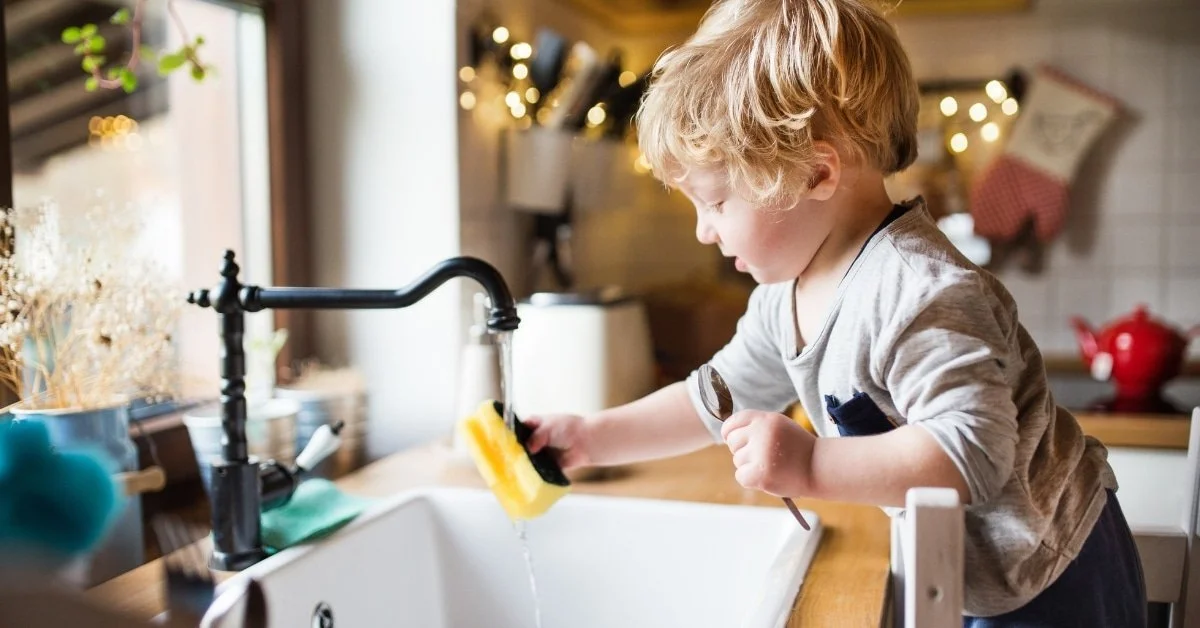
How many times have you said that to your toddler who desperately wants to help you load the dishwasher? Or your preschooler who insists on sweeping the floor with a broom twice their height? There's this assumption baked into modern parenting that children need to reach some magical age before they're ready to contribute to household tasks.
Meanwhile, your two-year-old is trying to put on their own shoes (backward, but still), your three-year-old is "helping" you cook by dumping ingredients everywhere, and your four-year-old is attempting to make their bed with a level of determination that's both adorable and slightly concerning.
Here's what most parents don't realize: that magic age when children can help with chores? It's much, much earlier than you think. In fact, your child has probably been ready to start contributing for months—or even years—and you've been unknowingly holding them back with the best of intentions.
The Surprising Truth About Toddler Capability
Child development research tells us something that often surprises parents: children as young as 18 months are not only capable of participating in household tasks, they're actually driven to do so. That intense desire your toddler has to "help" isn't just cute—it's a critical developmental window where they're building neural pathways, fine motor skills, and most importantly, a sense of capability and contribution.
The Montessori philosophy has understood this for over a century. Children between ages one and six are in what Maria Montessori called the "sensitive period" for order and independence. During this time, they're biologically driven to organize their environment, participate in real work, and master practical life skills. When we dismiss their attempts to help or tell them they're not ready, we're actually working against their natural developmental trajectory.
But our modern culture has somehow decided that childhood should be free from responsibility until some arbitrary later age. We've created a disconnect between children's natural desire to contribute and our willingness to let them try. The result? We end up with seven-year-olds who "suddenly" refuse to help with anything, when actually they've just learned over years that their help isn't needed or wanted.
What Real Help Looks Like at Different Ages
Let's get specific about what children can actually do, because the gap between parental assumptions and child capability is often enormous. These aren't aspirational goals—these are tasks that children at these ages do regularly in Montessori environments and homes that embrace early independence.
At 18 to 24 months, toddlers can put their dirty clothes in a hamper if it's accessible, throw trash in a low wastebasket, put toys in designated bins, help wipe spills with a cloth, and carry their plastic dishes to the counter after meals. Yes, these tasks will be imperfect. Yes, the dish might get dropped. But the motor planning, spatial awareness, and sense of contribution they're developing is worth infinitely more than the pristine execution you could achieve by doing it yourself.
By age two to three, children can set the table with unbreakable dishes, water plants with a small pitcher, help feed pets, dust low surfaces, help sort laundry by color, and put away their own clothes in low drawers. At this age, they're developing classification skills, following multi-step processes, and learning that they're capable members of the household. The three-year-old who helps sort laundry isn't just learning colors—they're learning that their contribution matters.
Preschoolers aged three to four can make their bed with simple bedding, sweep with a child-sized broom, help load the dishwasher with unbreakables, prepare simple snacks independently, and help with basic meal prep like washing vegetables or stirring ingredients. This is the age where children's desire to help is at its absolute peak. Miss this window, and you'll find yourself begging them to help just a few years later.
By ages four to five, children can set and clear the entire table, help with simple cooking tasks, fold simple items like washcloths and napkins, help put away groceries, and take out small trash bags. They're developing executive function skills, following complex instructions, and building genuine competence in household tasks.
School-age children from six and up can do their own laundry with supervision, prepare simple meals, vacuum, mop, do basic bathroom cleaning, care for younger siblings, and take responsibility for their own belongings and spaces. At this point, they should be genuine contributors to household functioning, not occasional helpers when you manage to convince them.
Why We Underestimate (And What It Costs Us)
Parents underestimate children's capabilities for reasons that feel loving but actually undermine development. We think we're protecting them from frustration when we do tasks ourselves. We believe we're letting them "just be kids" by not giving them responsibilities. We're genuinely trying to save time because yes, it's faster to do it ourselves than to teach and supervise.
But here's what this well-meaning approach costs: children who never develop the confidence that comes from genuine contribution, families where parents carry the entire mental and physical load of household management, and teenagers who genuinely don't know how to do laundry or cook a meal because they never learned during the critical years when they wanted to.
There's also an opportunity cost we rarely consider. Every time we do a task our child could do with appropriate furniture and tools, we're taking away a chance for them to build executive function, motor skills, and the fundamental belief that they're capable humans. That 18-month-old who wants to help load the dishwasher isn't in your way—they're trying to build neural pathways that will serve them for life.
The research backs this up. Studies consistently show that children who participate in household tasks from an early age develop stronger work ethic, better time management skills, higher academic achievement, and more satisfying relationships as adults. The eight-year-old who's been helping with dinner since age three didn't just learn to cook—they learned planning, sequencing, patience, and the satisfaction of contributing to family wellbeing.
The Furniture Factor Nobody Talks About
Here's something that doesn't get discussed nearly enough: one of the biggest barriers to children helping with chores isn't their capability—it's our furniture. When everything in your home is sized for adults, even capable children become dependent because they physically can't access what they need.
Think about what a toddler faces in a typical home. The sink is far above their head. The light switches are out of reach. The dishes are in cabinets they can't access. Their clothes are in drawers they can't open easily. Even if they want to help, even if they're developmentally ready, the environment tells them "not for you."
Child-sized furniture and carefully planned accessible storage changes everything. A low table where a three-year-old can actually set out napkins and cups. A step stool that's stable enough they can reach the sink safely. Dishes stored in a low cabinet they can access independently. Clothes in drawers at their height. These aren't luxury items—they're tools that transform children from dependent helpers to capable contributors.
At AlderBourn, we design furniture with this principle in mind. When a child can independently access the dishes because they're stored at their height, they can actually set the table without calling for help. When their clothes are in a low dresser they can open themselves, they can participate in putting away laundry. When they have a stable step stool, they can reach the sink to wash vegetables or rinse dishes. The furniture isn't just about convenience—it's about building genuine capability.
How to Start (Without Losing Your Mind)
If you're reading this and realizing your four-year-old could be doing significantly more than they are, don't panic. You haven't ruined anything, and it's never too late to start. But there are ways to introduce chores that actually work, and ways that just create power struggles.
Start ridiculously small. Don't suddenly announce that your child is now responsible for all these tasks. Pick literally one thing—maybe they put their breakfast bowl in the sink. That's it. Master that one task until it's completely routine, then add another. The goal is building habits and confidence, not overwhelming anyone.
Make tasks actually accessible. If you want your toddler to put dirty clothes in the hamper, the hamper needs to be in their room, low enough they can reach it, and stable enough it won't tip when they use it. If you want your preschooler to set the table, their dishes need to be somewhere they can reach them. Success requires setup.
Expect imperfection and embrace mess. The table your three-year-old sets will be crooked. The floor your four-year-old sweeps will still have crumbs. The bed your five-year-old makes will be lumpy. This is all completely fine and developmentally appropriate. The skills come with practice, and practice requires permission to be imperfect.
Never redo their work in front of them. If you must adjust something your child did, wait until they're not looking. Children who watch their contributions immediately "corrected" learn that their help isn't actually helpful. They internalize the message that they're not capable, even if that's not what you meant to communicate.
Connect tasks to natural consequences rather than rewards. Don't start a sticker chart for chores. Instead, help children understand the real reasons we do household tasks. We clear the table so we have space to do other activities. We put toys away so we can find them next time. We water plants so they stay alive. Real work has real meaning—artificial rewards actually undermine intrinsic motivation.
Use language that assumes capability. Instead of "Can you put your bowl away?" try "Please put your bowl in the sink now." Instead of "Do you want to help set the table?" try "Please put a napkin at each place." The difference is subtle but powerful. You're not asking if they can or want to—you're communicating that this is simply what members of the household do.
When Children Resist (And Why It Happens)
Let's address the elephant in the room. Some of you are thinking "This all sounds great, but my child refuses to help with anything." If your older child resists contributing, there are usually clear reasons.
If they never learned to help during the early years, they've missed that window when helping feels like play. A seven-year-old who's never been expected to contribute will resist, not because they're incapable, but because the pattern wasn't established. This doesn't mean it's too late—it just means you'll need more patience and consistency to build new habits.
If their early attempts were criticized or corrected, they've learned their help isn't actually wanted. Children who were told "You're doing it wrong" or who watched parents redo their work often stop offering to help. Who would want to continue doing something where they consistently "fail"?
If tasks are genuinely inaccessible, they've learned they're dependent. A child who can't reach dishes, access cleaning supplies, or use tools without help will resist because the task requires them to ask for assistance at every step. That's not contributing—that's being managed.
If everything is a battle, contributing has become punishment instead of participation. When household tasks are presented as chores you have to force kids to do, they become something to resist. When they're simply what families do together, resistance decreases dramatically.
The Long View on Childhood Contribution
Here's what we're really talking about when we discuss children helping with chores: we're talking about raising humans who understand that being part of a community—whether that's a family, a household, or eventually a workplace—means contributing to collective wellbeing.
The three-year-old who helps set the table isn't just moving napkins. They're learning that their actions affect others. That their contribution matters. That they're capable of real work that has real value. These aren't small lessons—they're fundamental understandings about how the world works and where they fit into it.
The five-year-old who makes their bed every morning isn't just straightening blankets. They're building executive function by following a multi-step sequence. They're developing pride in their space. They're learning that maintenance matters, that we take care of our belongings, that small daily actions create order.
The eight-year-old who does their own laundry isn't just washing clothes. They're developing genuine life skills. They're experiencing natural consequences when they forget and have no clean clothes for sports practice. They're learning planning and time management. They're building toward actual independence rather than extended dependence.
This is the long game of parenting. You could absolutely do every household task yourself for the next fifteen years. It would be faster, neater, and require less patience. But you'd be raising someone who reaches adulthood without basic life skills, without understanding their role in a community, and without the fundamental confidence that comes from genuine capability.
Or you could start now, accepting the mess and inefficiency, giving your child opportunities to contribute in real, meaningful ways. The table they set today might be crooked. But fifteen years from now, they'll be the roommate who does their share, the employee who takes initiative, the partner who contributes equitably, and the parent who teaches their own children that capability begins much earlier than anyone expects.
The Message We Send
Every time we tell a capable child "You're not ready yet" or "Let me do it," we're sending a message. We might think we're communicating love or protection, but what children hear is "You're not capable." And they believe us.
Conversely, every time we set up our homes to support independence, every time we hand our toddler a cloth to wipe a spill, every time we let our preschooler struggle with a task until they figure it out, we're sending a different message: "You are capable. Your contribution matters. You belong here as an active participant, not just a person we take care of."
That's the real magic age for helping with chores. It's not eight or ten or whenever we finally decide they're ready. It's 18 months. Two years. Three years. It's whenever we decide to believe in their capability and set up our homes and our expectations to match.
Your child has been ready to help for longer than you think. The question isn't whether they can—it's whether we're ready to let them try.
How has your child surprised you with their capability to help around the house? We'd love to hear about the tasks they've mastered earlier than expected!
Looking for furniture that supports your child's growing independence? Explore our collection of child-sized, accessible furniture designed to help children contribute confidently to household life at www.alderbourn.com.
